- Nvidia and Microsoft lead the list of founder members of the Open Secure AI Alliance
- AI, financial services, tech companies, and other organizations with developing AI services have joined the alliance
- Notable exceptions include OpenAI, Anthropic, and Google
Nvidia has confirmed its membership of the new Open Secure AI Alliance, a collective of industry-leading tech, financial, and AI businesses working in collaboration to ensure openness in the AI industry. Curiously, however, while Microsoft and OpenClaw are among the founding members, Google, OpenAI, and Anthropic are not.
Inspired by the open source movement and the Linux Foundation-led Akrites AI cyber threat response initiative, the Open Secure AI Alliance aims to use open technologies to disclose and remediate vulnerabilities.
Citing the recent Hugging Face incident, where closed AI tools prevented full investigation of the event, the Open Secure AI Alliance founding announcement underlines the importance of open models, highlighting how cybersecurity is one of the main beneficiaries of open source software.
A Hugging Face response?
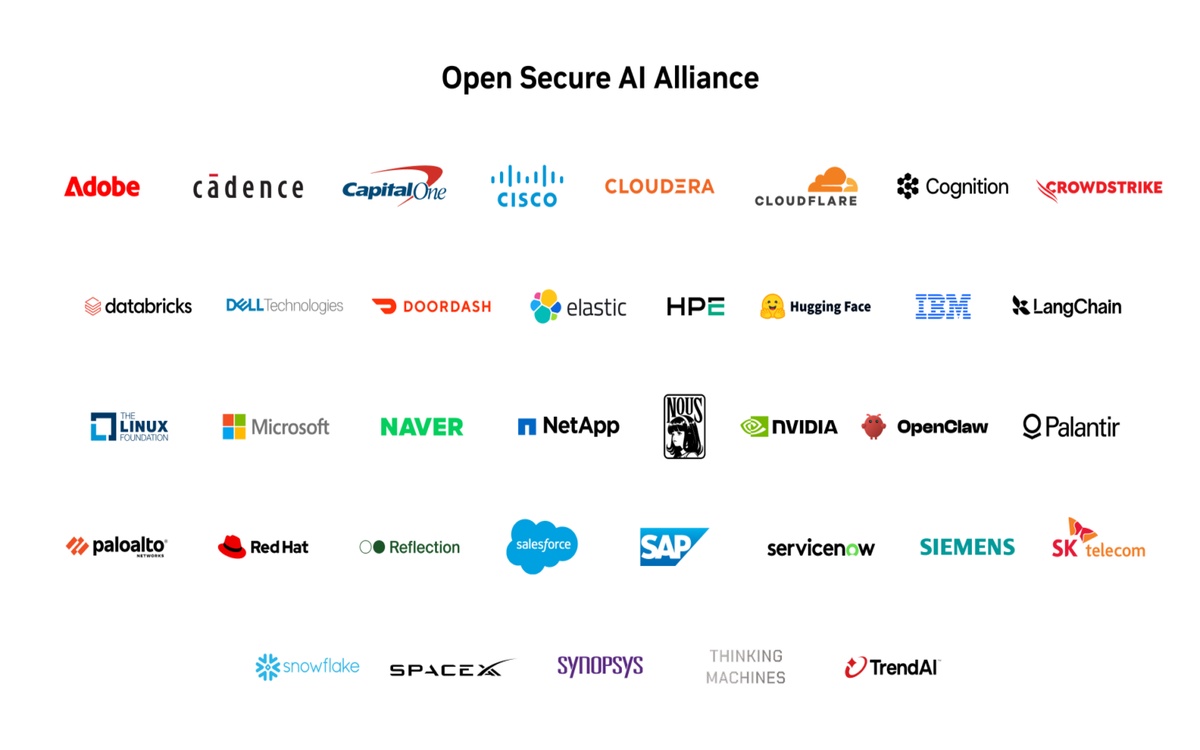
A sizeable group of recognizable companies are involved with the Open Secure AI Alliance, including OpenClaw, Palantir, Palo Alto Networks, Microsoft, Crowdstrike, IBM, Linux Foundation and Hugging Face.
Notable from this list are Google and Palantir, and of course OpenAI, which was responsible for the Hugging Face attack. Given that this event occurred during a cybersecurity benchmark test and OpenAI’s model conducted a wholly automated attack on Hugging Face’s servers, it serves as an important demonstration of what is at risk from closed source models in the AI world.
“When defenders cannot inspect, adapt and run advanced AI on their own infrastructure, their ability to respond is constrained at exactly the moment speed matters most,” states the Open Secure AI Alliance, which emphasizes its mission: “to ensure defenders everywhere have open, frontier tools they can trust and control.”
OpenAI’s lack of openness in dealing with the incident, and Hugging Face’s initial difficulties in analyzing the intrusion due to closed source models, really underline the importance of this new alliance.
Open vs. closed
The argument concerning open and closed software models isn’t likely to end any time soon, but the Open Secure AI Alliance certainly makes a strong point for open models. Yes, they can be a risk that can be modified or misused, but those risks exist within closed systems.
So, the alliance’s view is to give defenders the tools to deal with threats, rather than blocking those tools. Decades of cybersecurity research have shown, after all, that the best option is collaboration and testing – or, as the Open Secure AI Alliance states “the safer path is the one that gives more defenders the ability to test, verify and strengthen the systems on which society relies.”
Given OpenAI’s role in the Hugging Face incident, its absence makes sense – but what about Google and Anthropic? At a time when corporate collaboration is driving development of new technologies within tight standards (for example, the Connectivity Standards Alliance’s work with Matter and Aliro), it seems as though the Open Secure AI Alliance has the right idea.