New Mac mini 2026: At a glance
What’s new: The 2026 Mac mini delivers much faster performance, especially for graphics and AI, thanks to the M6 and M5 Pro chips. It also brings faster storage and upgraded connectivity, with Wi-Fi 7, Bluetooth 6 and 2.5Gb Ethernet as standard.
Release date: Announced on August 25, 2026
Price: From $899/£899
Pre-orders: Pre-order now
On sale: September 22, 2026
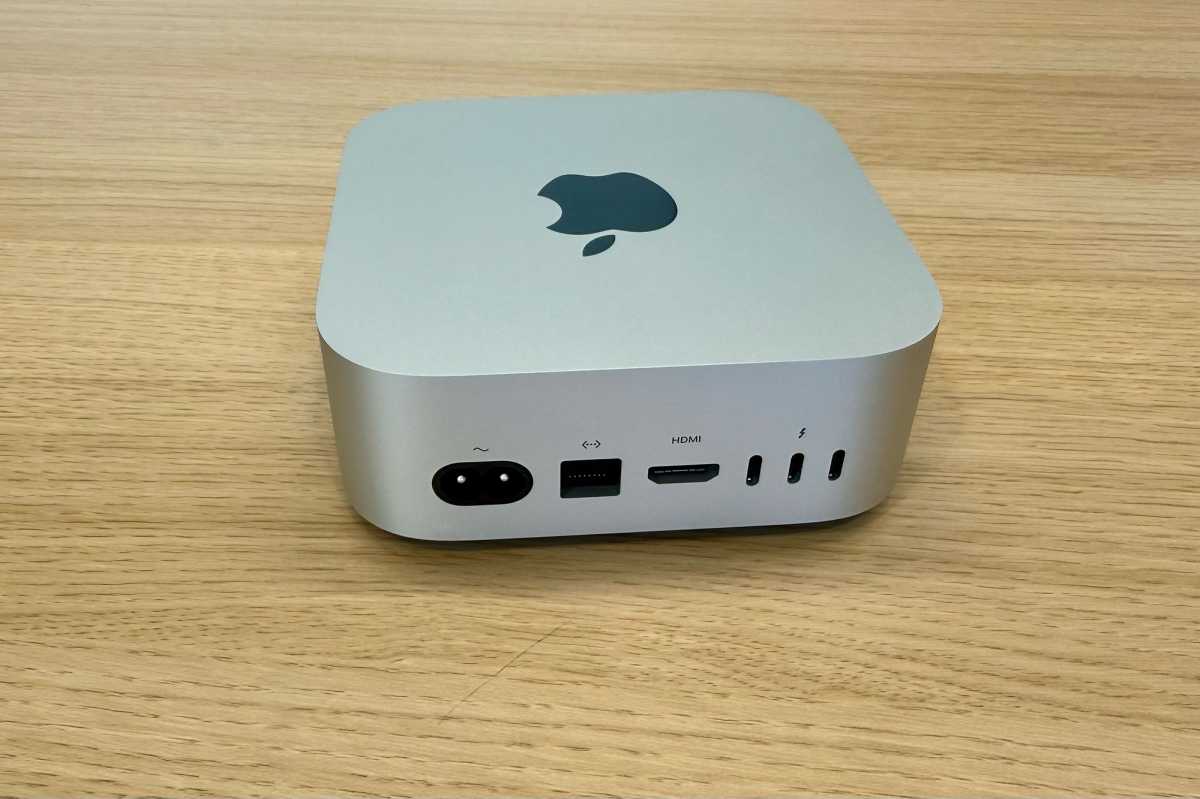
Apple has launched a new Mac mini to replace the M4 and M4 Pro Mac mini which was introduced in October 2024. Externally the 2026 Mac mini looks just as it did following the redesign in October 2024 – it’s still a five-by-five-inch square with two front USB-C ports and the headphone jack, with three Thunderbolt ports, HDMI and Ethernet on the rear. It’s what’s inside that has changed.
The new Mac mini models offer new chips, the M6 and the M5 Pro. This is a similar scenario to a few years ago when Apple launched the M4 Mac Studio alongside the M3 Ultra Mac Studio. There is likely to be some confusion about the chip generations so we will explain the differences in more detail below.
These new chips will offer a significant jump in performance, especially relating to AI. With this update it is particularly apparent that Apple is positioning the Mac mini as an AI machine.
When is the new Mac mini available?
The new Mac mini M6 and M5 Pro models were announced on August 25, 2026, but they won’t actually ship until September 22.
You can pre-order now though, and if you want one we recommend doing so because the chip shortages that have plagued the industry are likely to mean stock quickly runs out.
How much does the new Mac mini cost?
| Model | Price |
| M6, 16GB, 256GB | $899 / $899 |
| M6, 16GB, 512GB | $1,199 / $1,199 |
| M5 Pro, 24GB, 512GB | $1,699 / $1,699 |
Has the Mac mini price gone up?
In June 2026, Apple raised the starting price of the Mac mini by $200, from $599 to $799. The increase was part of a broader price hike across the entire Mac lineup, which Apple attributed to an unprecedented rise in component costs, particularly RAM.
We had hoped this meant Mac mini pricing would remain at the June level for the foreseeable future. Unfortunately, with the arrival of the new models, Apple has raised prices again—this time by a further $100/£100.
Here’s a breakdown of the key price changes for the Mac mini:
| Chip | Original Price | June Price | Update price |
| M4, 16GB, 256GB | $599 / £599 | $799 / £799 | $899 / $899 |
| M4, 16GB, 512GB | $799 / £799 | $999 / £999 | $1,199 / $1,199 |
| M5 Pro, 24GB, 512GB | $1,399 / £1,399 | $1,599 / £1,599 | $1,699 / $1,699 |
This is no longer a budget Mac.
Mac mini M6 and M5 Pro specs
As well as the move from M4 and M4 Pro to M6 and M5 Pro, the Mac mini also gains storage that is up to twice as fast, according to Apple, Wi-Fi 7, Bluetooth 6, 2.5Gb Ethernet and USB-C genlock support.
The new M6 chip has launched in the Mac mini.
Apple
Processor: M6 and M5 Pro chip compared
There may be some confusion over the chip generations in the new Mac mini. The mainstream model uses the newer M6 chip, while the more powerful model uses the older-generation M5 Pro. Pro chips are designed for heavier professional workloads, with more CPU and GPU cores, higher memory bandwidth, support for more unified memory, additional displays and faster Thunderbolt connectivity. So while M5 Pro remains the more capable chip overall, M6 offers a significant step up from the standard M5 and an even larger jump from the M4 in the previous generation Mac mini.
M6: The Mac mini is the first Mac to ship with the M6 chip, replacing the M4 in the entry-level model. It features a 12-core CPU and 12-core GPU, up from 10 CPU and GPU cores in the previous generation, and supports up to 32GB of unified memory with 170GB/s memory bandwidth. Apple promises up to 40% faster CPU performance, twice the graphics performance and up to 4x faster AI performance than M4. It also introduces Apple’s first Dual 16-core Neural Engine, delivering up to twice the Neural Engine performance.
M5 Pro: The M5 Pro replaces the M4 Pro in the higher-end Mac mini and can be configured with up to an 18-core CPU and 20-core GPU. Apple claims up to 4x faster LLM processing, 1.4x faster Blender ray-tracing performance and 1.5x faster Affinity image processing than M4 Pro. It supports up to 64GB of unified memory with 307GB/s memory bandwidth. Both chips feature Neural Accelerators in their GPU cores, but the M5 Pro’s additional CPU and GPU cores, greater memory capacity and higher bandwidth make it better suited to video production, 3D rendering, development and larger local AI models.
With both of these chips the focus is very much on AI with Apple emphasising that both the M6 and M5 Pro incorporate Neural Accelerators in their GPU cores.
Storage
Apple claims the new Mac mini offers up to 2x faster storage compared to the previous generation.
Other than that the storage capacities are as before – 256GB, 512GB, 1TB and 2TB for the M6 model and 512GB, 1TB, 2TB, 4TB and 8TB SSDs for the M5 Pro model.
RAM
The new M6 model supports 32GB RAM unlike the M4 model which maxed out at 24GB.
The new M5 Pro model supports a maximum of 654GB RAM, up from 48GB.
Connectivity: WiFi & Bluetooth
Simon Jary / Foundry
Wi-Fi: Both models now support Wi-Fi 7 which replaces the previous wireless standard Wi-Fi 6E.
Bluetooth: Both models also move to Bluetooth 6, replacing Bluetooth 5.3.
Ethernet: Previously faster Ethernet was an upgrade; the new models now have 2.5Gb Ethernet, with 10Gb Ethernet available as a configurable option.
Thunderbolt: The M6 Mac mini has three Thunderbolt 4 ports and the the M5 Pro version has three Thunderbolt 5 ports. This is the same as the previous generation.
Genlock: Apple has added Genlock support over USB-C. This is used for synchronising a display and camera (which can be an iPhone 17 Pro). It is aimed at professional video workflows
Display support: The M6 Mac mini will support up to two 6K displays plus one 5K display, while the M5 Pro supports up to three 6K displays.
Other ports include two USB-C/USB 3 ports and a headphone jack on the front and HDMI and Ethernet remain on the rear, as previously.
Mac mini M6 vs M4: What’s Changed
| What | Was | Now |
|---|---|---|
| CPU | 10-core M4 | 12-core M6 |
| GPU | 10-core M4 | 12-core M6 |
| Neural Accelerators | 16‑core Neural Engine | Dual 16‑core Neural Engine |
| Bandwidth | 120GB/s memory bandwidth | Up to 170GB/s memory bandwidth |
| Max RAM | 24GB | 32GB |
Mac mini M5 Pro vs M4 Pro: What’s Changed
| What | Was | Now |
|---|---|---|
| CPU | 12-core to 14-core M4 Pro | 15-core to 18-core M5 Pro |
| GPU | 16-core – 20-core M4 Pro | 16-core – 20-core M5 Pro |
| Neural Accelerators | 16‑core Neural Engine | 16‑core Neural Engine |
| Bandwidth | 273GB/s memory bandwidth | 307GB/s memory bandwidth |
| Max RAM | 48GB | 64GB |
Who is the Mac mini best for?
The M6 Mac mini will suit someone who wants a fast, compact desktop Mac.
The M5 Pro Mac mini is aimed at developers and creative or technical professionals who need more CPU and GPU performance, memory or Thunderbolt bandwidth, but don’t require the greater performance and expandability of a Mac Studio. It is particularly well suited to running AI models and agentic AI workloads locally.
Should you buy the 2026 Mac mini?
Availability is likely to be limited due to the global RAM shortages so we expect that stock will quickly run out.
For more guidance, read: Should you buy a Mac mini now or wait?
Considering an alternative? Read our Best Mac buying guide.