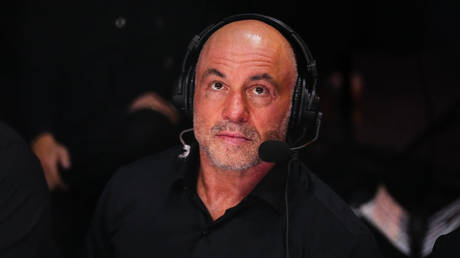
South Carolina Representative Jim Clyburn endorsed calls to expand the Supreme Court over the weekend, reflecting a growing resolve among Democratic officials to do what they considered unthinkable a decade ago and fairly unpalatable as recently as five years ago. “I think we are in a position now that calls for some significant actions taken by the Congress and we ought to expand, and thirteen is a pretty good number,” Clyburn, the House Minority Whip, told Meet the Press host Kristen Welker. “A baker’s dozen, it would be a good number to have on the court.”
Clyburn is not the only prominent Democrat to endorse Supreme Court expansion in recent years. Former Vice President Kamala Harris, the party’s 2024 standard-bearer, also agreed that Congress should add four more seats to match the thirteen federal circuit courts of appeal. (The First through Eleventh Circuits hear cases from the fifty states, while the D.C. Circuit hears cases from the nation’s capital and the confusingly named Federal Circuit hears specialized appeals on patents and whatnot.)
Support from Clyburn stands out because he is, as Talking Points Memo’s Josh Marshall notes, the first member of Democratic congressional leadership to endorse the idea. That would, in turn, give cover for more rank-and-file members to support court expansion. Clyburn is also, notably, not exactly a radical member of the Democrats’ upper ranks. In 2020, his support helped swing the Democratic preisdential primary toward then-candidate Joe Biden, the most moderate choice in the race at that time.
I do not know whether the justices particularly care about Clyburn’s position on anything. But they should take stock of what it reflects: a deep and implacable desire among Democrats to break the conservatives’ grip on the Supreme Court through extraordinary means. I cannot stress enough how much the Supreme Court’s conservative majority has brought this on themselves.
The turning point in the high court’s trajectory came in 2018, when Justice Anthony Kennedy retired from the Supreme Court. Kennedy was the last remaining Republican appointee who was not, strictly speaking, a member of the conservative legal movement. He did not identify as an originalist or a textualist, instead hewing (for better or for worse) to his own idiosyncratic vision of how the Constitution should be interpreted. Thanks to the vicissitudes of fate, he also served as the court’s median justice from 2005 until his retirement.
In that role, Kennedy maintained an ideological balance of power of sorts on the high court. It was still undoubtedly a conservative Supreme Court. He wrote or joined some of the most consequential decisions of the era, from 2010’s Citizens United v. FEC to 2013’s Shelby County v. FEC. In less high-profile cases involving federalism and regulatory power, he was more likely to join his fellow conservatives than not.
At the same time, Kennedy also moved in ways that led to major liberal victories or prevented major defeats to the causes they support. Kennedy voted to uphold some restrictions on abortion over the years, but declined to provide the fifth vote to overturn Roe v. Wade. He regularly sided with the court’s four liberals to protect affirmative action in higher education and to narrow the scope of capital punishment. Most notably, Kennedy played a singular role in advancing LGBT rights in the Constitution from the 1990s onward, culminating in the landmark 2015 decision that struck down same-sex marriage bans nationwide.
The Kennedy Court, as one might call it, was a conservative court where many liberals could still expect that they would get a fair shake. Kennedy’s moderating presence also ensured that the court did not drift too far to the right. Conservative litigants and interest groups presented narrower arguments and positions to advance their causes ten years ago, fearing overreach and adverse rulings. Everybody who brought their case before the high court had reason to believe they might win.
Now nobody thinks they do. Public approval of the high court has cratered in recent years, fueled by growing dissatisfaction on the right and outright hostility on the left. Only 33 percent of Americans said they approved of the high court’s job performance in July, according to Gallup. Almost nine in ten Democrats registered their disapproval, along with two-thirds of independents and just above 40 percent of Republican voters.
Gallup’s survey is instructive in other ways, particularly about trends on the right. The modern-day nadir for conservative support came in July 2015, when a mere 18 percent of Republicans told Gallup that they approved of the court’s work. One can hardly blame them. The 2014-2015 term was the apex of the Kennedy Court’s liberalism, with banner victories on gay rights, climate change, gerrymandering reform, and the like. But their outrage didn’t last. Two years later it had rebounded to 67 percent and three years later it cracked 72 percent, even as the court remained temporarily deadlocked by Antonin Scalia’s death in 2016.
After Kennedy retired and Justice Brett Kavanaugh replaced him, a brief two-year interregnum saw Chief Justice John Roberts in the pilot’s seat. Again the court lurched to the right. In 2019, for example, Roberts closed the doors of federal courthouses to partisan-gerrymandering claims after two decades of reluctance from Kennedy to constitutionalize the sordid practice. Even then, there still seemed to be a handbrake on the court: Roberts voted to uphold an abortion-related precedent in 2020 that he had voted against a few years earlier.
Then Ruth Bader Ginsburg died in September 2020 and Republicans rushed to install Justice Amy Coney Barrett the following month on the eve of the presidential election. Now the conservatives were fully and completely in control of the court, and everything began to change as soon as right-wing litigants could get the right cases to the nine justices. This happened to coincide with the collapse of Democratic control of Congress and the Biden administration’s practical ability to pressure the court through expansion proposals, which were buried with a presidential commission shortly after he took office.
Roe v. Wade was overturned two years later. Affirmative action in college admissions fell the year after that. So too did the last glimmers of nonpartisanship. The justices rewrote the Fourteenth Amendment’s Disqualification Clause to pave the way for Trump to run for a second term despite his plain-text ineligibility, and blocked federal courts from considering the question again if he won. The conservative majority invented presidential immunity out of thin air in the summer of 2024, freeing Trump from an election-eve criminal trial and setting the stage for his second-term corruption and criminality.
Roberts, who once vowed in 2005 to only call “balls and strikes,” ruled that the president could climb into the stands and bludgeon people to death with a baseball bat. Sean Wilentz, a prominent historian of the early republic, compared Trump v. United States to Dred Scott v. Sandford. That infamous 1857 decision that struck down the Missouri Compromise, ruled that free and enslaved Black people could never be citizens, and precipitated the Civil War. In a similar way, Wilentz wrote, the court’s immunity ruling “has radically changed the very structure of American government, paving the way for MAGA authoritarianism just as the Taney Court tried to pave the way for enshrining the Slave Power.”
Clyburn also invoked the specter of Roger B. Taney, Roberts’ distant predecessor as chief justice, and Dred Scott in Sunday’s interview. His support for court expansion came because the Supreme Court “has decided to reverse course and take this country back to those rulings of Justice Taney, that said, ‘No Black man has any right that white man must respect,’” a paraphrasing of one of Taney’s most infamous lines in the 1857 ruling. That is likely a reference to the court’s shameful decision earlier this year in Louisiana v. Callais.
In a 6-3 ruling along the usual lines, the court’s conservative majority completed its demolition of the Voting Rights Act of 1965 by making it virtually impossible to challenge racial gerrymandering under Section 2 of the historic law. Southern state legislatures practically sprinted over the summer to gleefully wipe out as many majority-Black congressional districts as they could. Clyburn’s own district, the only one of its kind in his state, was spared only because South Carolina Republicans feared dissolving it would make it easier for Democrats to win the surrounding districts.
Now there is nothing left for even the most milquetoast and diffident liberal to defend from this majority. Gone are the days when liberal law professors at Ivy League schools would write op-eds in major newspapers framing the court or individual rulings as neutral, nonpartisan, or more complicated than it seemed. Legal pundits, having been burned before, gave up on seeking the hidden liberals within the right-wing jurisprudence. Nobody to the left of Mitt Romney is risking their credibility on a runaway right-wing bench. The conservative majority has demolished century-old precedents that made progressive governance possible with unalloyed zeal while also rewriting the Constitution in Donald Trump’s image. Everything is what it looks like now.
The amusing part, were it not so serious, is that the Roberts Court has also botched its relationships on the right. By securing a six-justice conservative majority, legal conservatives and rank-and-file Republicans alike believed that they had essentially secured a win button for American politics. In theory, they can do whatever they want while liberals will have to climb uphill both ways in the snow while carrying 50-pound sandbags on each shoulder just to pry away a single conservative vote, let alone two of them.
Except that hasn’t happened, in large part because there is now a serious ideological mismatch between the court’s conservative justices and American conservatism writ large. Even the justices appointed by Trump are members of the Bush-era generation of legal conservatives, not the Trump-era one. They had to prove their ideological bona fides in right-wing legal circles on issues like abortion and affirmative action, not mass deportations and birthright citizenship.
Indeed, looking at the court’s most recent rulings from the latest term—the first full term of the second Trump administration—as a fervent MAGA acolyte must be infuriating. Roberts voted fourteen years ago to save Barack Obama’s signature domestic policy achievement (the Affordable Care Act) while writing the majority opinion that struck down Trump’s “Liberation Day” tariffs, neutering a core pillar of his economic and foreign policy agenda. Trump himself is largely volcanic towards the court these days, occasionally accusing some of the justices of insufficient personal loyalty for appointing them.
That turn of events is also unsurprising. The president, like every abuser, is angrier about what he can’t do than happier about what he can do. Can he impose his beloved tariffs on anyone for any reason at all? No, says the Supreme Court. Can he fire Lisa Cook from the Federal Reserve’s board of governors? No, says the Supreme Court. Can he send troops into American cities? No, says the Supreme Court. Can he rewrite the Fourteenth Amendment’s Citizenship Clause in Stephen Miller’s image? No, no, no, no.
Nor do these bit-by-bit rejections of Trumpism spur any goodwill or reassessment on the left. If anything, they only underscore how far to the right the court has moved. Yes, it’s true that Roberts’ sterling opinion in Trump v. Barbara upheld birthright citizenship. But it also exposed that only two conservative justices (Roberts and Barrett) would endorse the Citizenship Clause’s plain meaning without reservation. The high court’s ruling in Learning Resources v. Trump kneecapped Trump’s plans to levy tariffs without Congress’s assent. It also reaffirmed the long-standing suspicion that the major-questions doctrine exists only to sabotage Democratic presidents when only half of the conservatives would vote to use it against Trump. The president can fire any Senate-confirmed official in the executive branch, frustrating liberals who favor independent regulatory agencies, but can’t seize control of the Fed, enraging a president who probably wishes that he could install a big dial that says INTEREST RATES on the Resolute desk.
The Supreme Court is not an elected branch of government, obviously. The justices enjoy lifetime tenure, so they don’t have to worry about their approval ratings on a day-to-day basis. But they do have to keep an eye on it in the long run. The court’s role in our constitutional order depends on the assent and approval of the legislative and executive branches, which can wipe out much of the court’s power or simply ignore its ruling. Those branches are only kept in check, at least for now, by a deep cultural respect for the American judiciary that is older than the republic itself.
Now, in their ideological zeal, they have sailed into the abyss. The post-Barrett flood of right-wing rulings has completely drained the reservoir of liberal reverence that was filled by the Warren Court in the 1960s, with the Callais ruling squeezing out the last few drops. Trump’s personal vehemence towards a court that won’t give him everything he wants, even when it gives him far more than it should, is also decaying its support on the right.
The result is a Supreme Court that nobody trusts and where everybody loses. Thanks to Trump’s cascading second-term failures, Democrats may get a second chance to expand the court in 2029. If Clyburn’s own changing stance is any indication, the push towards court reform may be irresistible for the party this time. And if it happens, the conservative justices will have no one to blame but themselves.