When Apple officially unveiled the Apple Watch Series 12 and the Ultra 4, it claimed that its latest generation of smartwatches offered the most accurate heart rate sensing on a wearable, thanks to its redesigned Health Sensing System. Accuracy improvements aside, the new system’s advances have made it possible for Apple to introduce new Watch features like its Readiness score.
This metric looks at a myriad of watch data to determine whether you’re in optimal shape to tackle a physically or mentally demanding day. That’s accompanied by a simple prompt to put that score into context. However, this isn’t a new development for other wearable owners: if you use an Oura Ring, a Garmin watch, a Whoop or even a Google Fitbit Air, receiving a readiness score of some description won’t be new to you. So why did Apple feel now was the time to join the Readiness party?
“It’s down to the evolution and the advancements we’ve made in the hardware technology, which has really brought about this to be the right time,” says Craig Bolton, Director of Fitness Technologies.
“We’ve built many health and fitness features, and quite a few of them are related to Readiness. The Health Sensing System unlocks the ability for continuous heart rate variability and all-day heart rate measurements and that’s really important and critical when we think about trying to bring a really accurate and concise and simple feature to users.”
How Readiness scores work
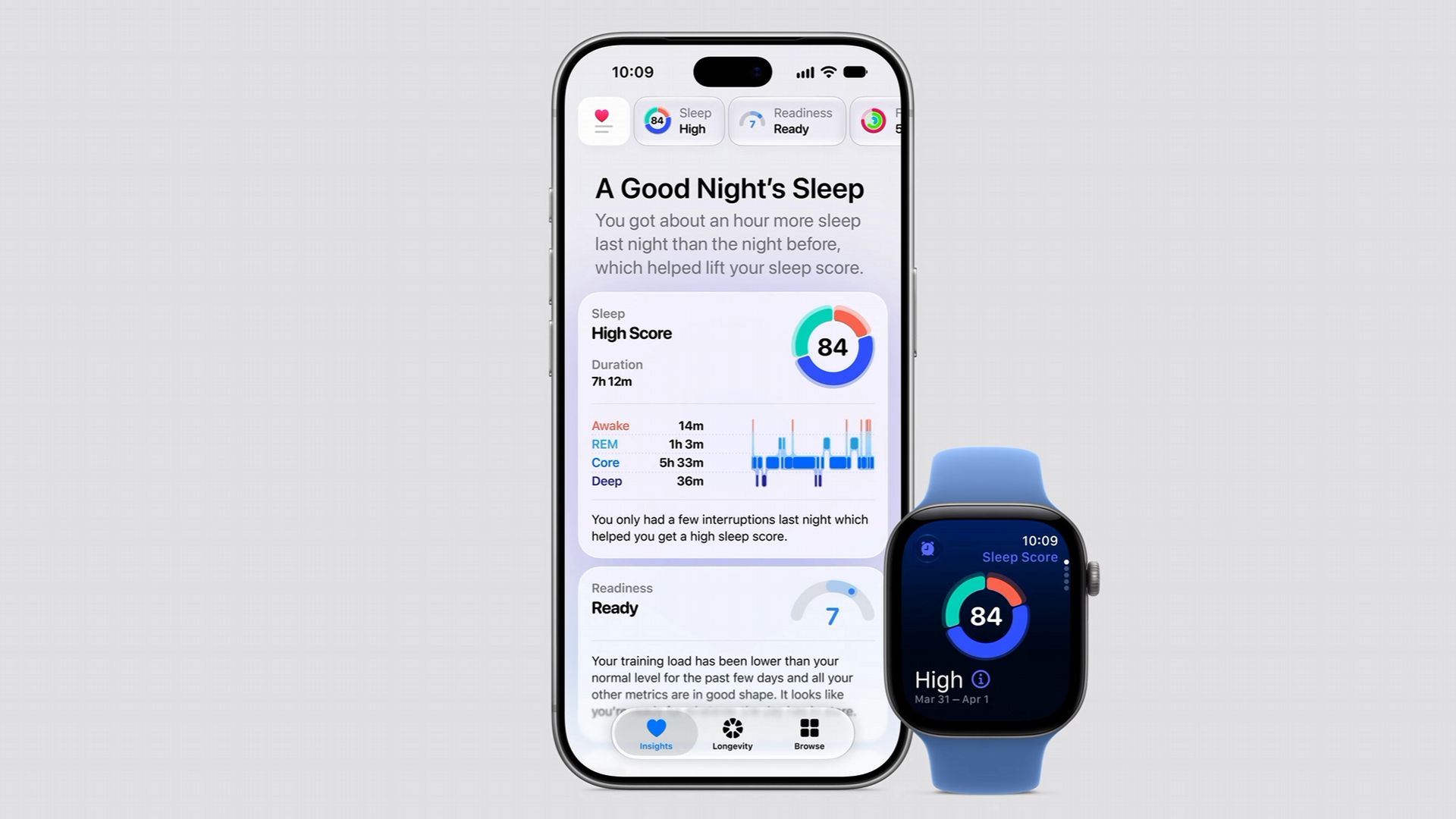
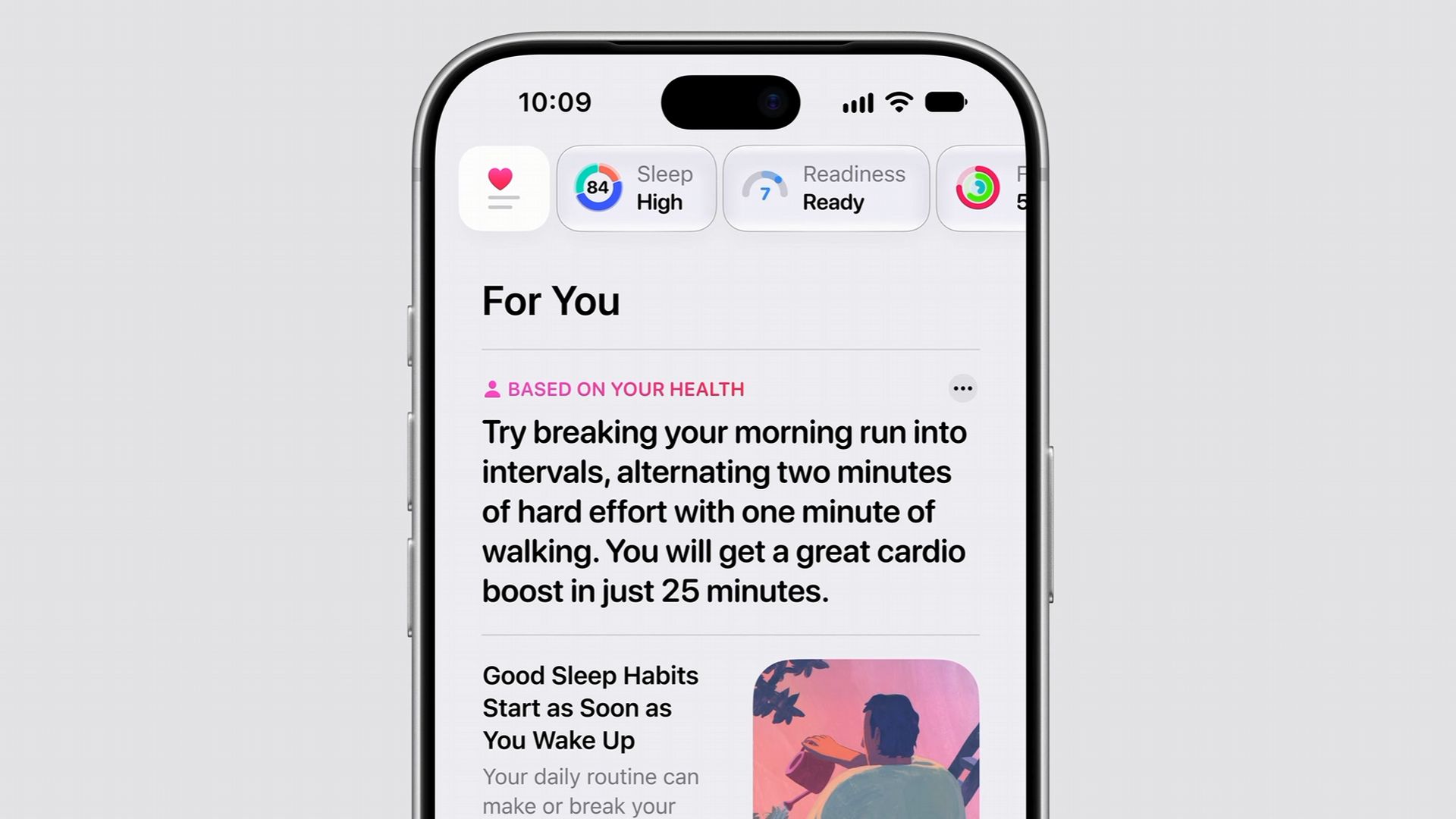
Readiness scores can be viewed from the dedicated Readiness Watch app, Watch complication and the redesigned Health app. It looks at your sleep score, vitals data including temperature and blood oxygen, as well as your most recent workout data and training load.
Apple confirmed to us that workout data can be taken from third party apps as well as Apple’s own apps. To start seeing scores, you need to record seven night’s worth of sleep data to establish a baseline.
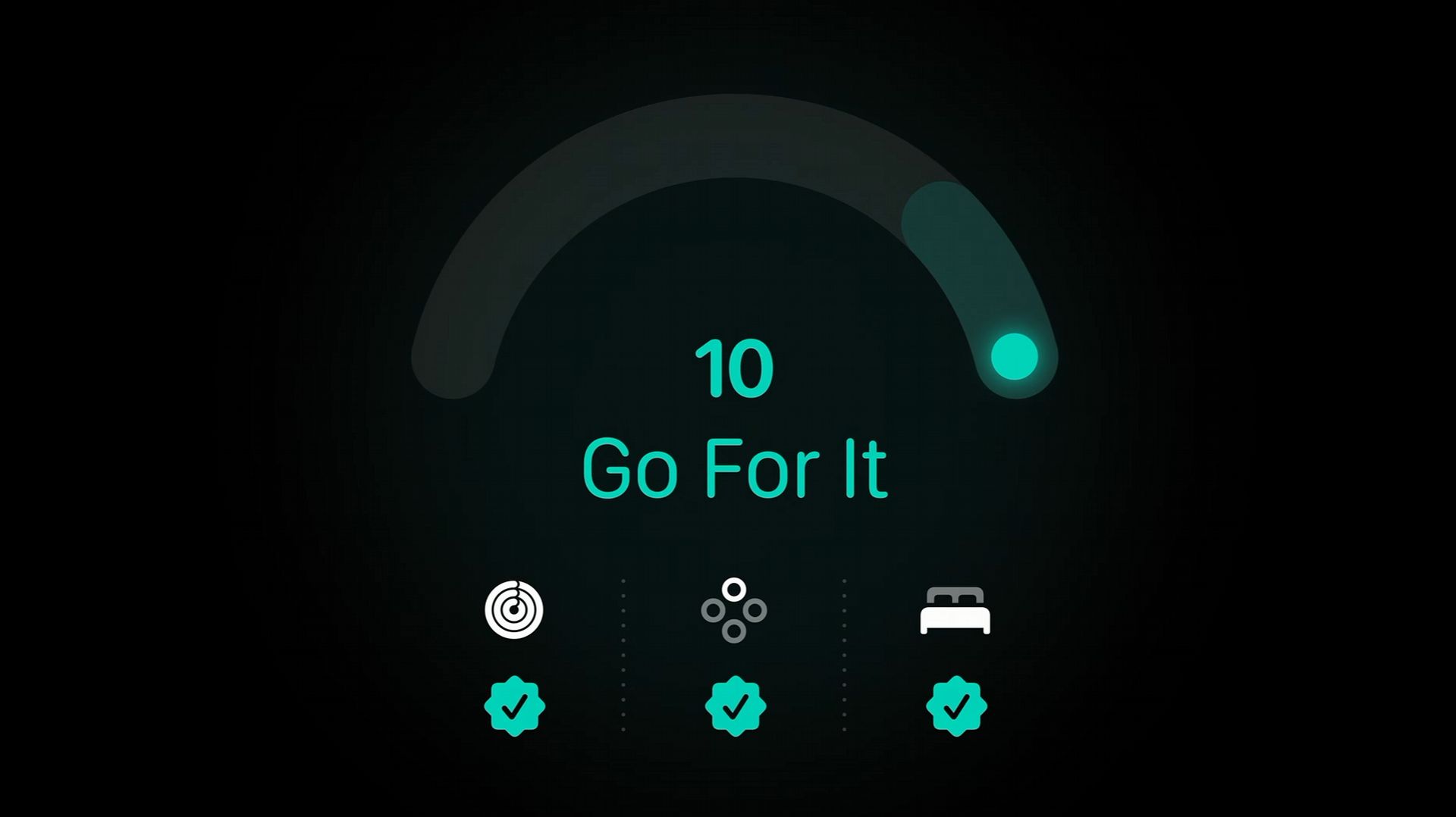
Unlike Oura, Google and Garmin, Apple has opted to score users Readiness on a scale of 1-10 as opposed to 1-100. Apple has its reasons for choosing a different scoring scale and it underpins how it thinks about delivering new fitness features.
“All of our features in general and particularly in the health and fitness space, we want them to be simple and intuitive,” explains Bolton. “We thought providing a score alongside a simple category saying you’re ready or to pace yourself gives that instant glanceable view. If you’re waking up in the morning or throughout the day and you want to have a quick check-in, that can give you that little insight that you need.
“One of the principles that was really important to us was if you want to go deeper, there is more depth there. So you can instantly see what’s driving that score up or down, tap into it to your heart’s content, and dig into the various apps and features that are driving scores.”
Why HRV is key to getting you ready
Readiness scores are strongly tied to Apple’s ability to continuously monitor heart rate at a much higher sampling frequency than previous watches, thanks to the new Health Sensing System. The Apple Watch Series 11 can continuously monitor heart rate every five minutes. The Series 12 and Ultra 4 can do that every five seconds. Apple says it’s this massive improvement in the fidelity of heart rate monitoring that explains why only the Ultra 4 and the Series 12 can dish out Readiness scores.
There’s another heart-related metric that’s vital and that’s heart rate variability. This is the measurement of the intervals between heart beats. It’s a measurement that again has featured on wearables for some time and has been used to better understand stress, recovery and the effect of diet and exercise on your body.
For Series 12 and the Ultra 4, Apple is introducing two HRV measurements: overall HRV and recovery HRV. It’s the latter that’s most relevant for your Readiness scores and can additionally be viewed inside of Apple’s heart app on the Watch.
“It’s a critical element to this,” says Bolton. “[Recovery HRV] feeds into Readiness, but it’s also part of our Vitals experience as well. So you’re going to be able to independently look at HRV recovery through the course of the night and throughout the day and that’s providing added insight and education about what that could mean for you.
“For us, the real value here is we’re taking that and we’re partnering it with these other existing features like sleep and other vitals and also your activity, to give this really distilled and synthesised version of all your metrics and what they might mean for you.”
Rooted in research
It will come as no great surprise that Apple hasn’t just plucked its Readiness score out of thin air. It’s a metric that’s been developed through various studies conducted by Apple. That includes Apple’s Heart Rate and Movement study, which was first announced in 2019. Data was used from the study to “tune the experience” of Readiness scores. Apple’s Heart Rate Accuracy study, which summarises the accuracy of its new Health Sensing System also played its part too. There were also additional studies conducted surveying people to understand their fatigue levels and how people felt versus what their metrics said.
“We also did some testing and studies to make sure that the Readiness feature was behaving the way it should for users,” says Bolton. “The reality is sometimes in the morning you will wake up and this may confirm exactly what your body’s already telling you. In some other instances it may actually surface something that you didn’t notice about before. But in terms of the underlying data, the features that provide it have been studied and there’s a lot of rigour independently on each of them.”
Readiness is not just about the AM
Before Apple, Readiness scores were something you mainly glanced at in the morning. On the Watch Ultra 4 and the Series 12, Apple sees Readiness as an all-day affair. That means what happens during the day will have an impact on your Readiness score, whether that’s completing a tough workout or something has changed in your vitals data.
“So something that our new health sensing system unlocks is this continuous heart rate monitoring throughout the course of the day,” says Bolton. “This could potentially lead to us or the feature recognising that you’ve got an elevated heart rate throughout the course of the day and that will change your Readiness. So as you’re going throughout the day there’s this value that it brings as well.”
While previous takes on readiness scores have felt more fitness-centric in terms of who will find this metric most valuable, Apple believes this is something all Watch wearers can get value from glancing at.
“You might have someone who’s managing a busy week with kids, work and trying to get adequate sleep, squeezing a workout in here and there,” says Bolton. “For that person, sometimes it’s just going to reaffirm or confirm to them something that they already know or they’re already feeling in their body that today’s a good day or you’re not feeling things aren’t great today.
“For that same person, it may actually surface something that they’re not already noticing. So they’ve been under some stress at work. This might give that sort of little red flag to say, hey, it might be time to recover or take it easy because of some of these metrics we’re seeing.
“You don’t have to be an elite athlete to get value out of this, and anyone who’s wearing the watch and sleeping with it at night can get this incredible insight each day to help them get through it.”