“This move is a diplomatic all-timer,” Santi Ruiz, a policy-focused writer for the Institute for Progress and editorial team member at AI company Anthropic, posted on X. “It’s like Messi cutting inside. You know it’s coming. It doesn’t matter how many times they run it. You’re getting those pandas, and you’ll like it.”
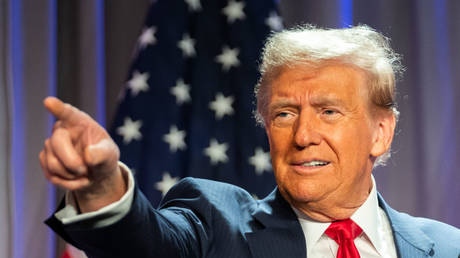
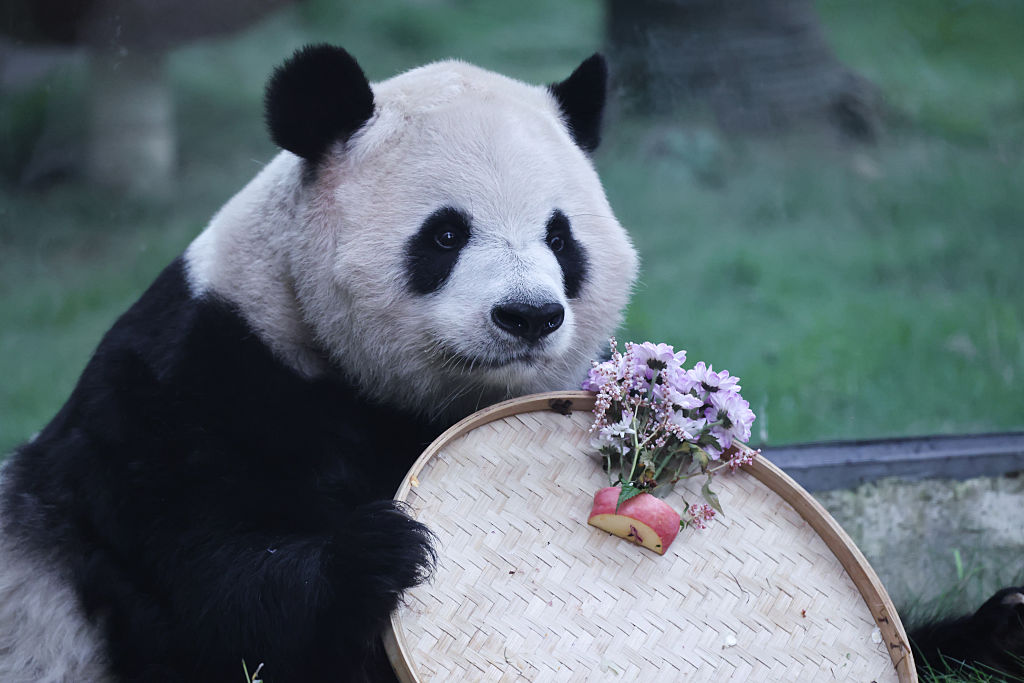
The tried-and-tested offering came once again on Thursday as Chinese President Xi Jinping announced during his state visit to the U.S. that Ping Ping and Fu Shuang, two giant pandas from a research base in Chengdu, would be lent to Zoo Atlanta in the state of Georgia—but whether this so-called panda diplomacy remains as welcome as it has over the decades is less clear, eliciting mixed reactions in 2026.
The practice gained traction after the National Zoo received giant pandas from Beijing in the wake of President Richard Nixon and First Lady Pat Nixon’s historic trip to China in 1972, which marked a new, positive chapter in U.S.-China relations.
China claims ownership of nearly all the giant pandas in the world, even their offspring, and controls who receives them. Beijing eventually shifted from gifting giant pandas to leasing them to other countries in 1984 as the animal’s population dwindled, but the practice continued and spread to other nations like Austria, Canada, and Malaysia. China regularly considers loaning pandas an act of goodwill—even when the host nation typically foots the bill of about $1 million annually for a pair.
A giant panda’s presence or absence in a country tends to represent ebbs and flows of its relationship with China. For instance, amid tensions with Japan over Taiwan, Tokyo returned two giant pandas to Sichuan on loan in January, marking the first time Japan does not have a giant panda since 1972, when China-Japan ties first normalized. In 2010, two U.S.-born panda cubs returned to China, days after Chinese officials warned then-President Barack Obama against meeting the Dalai Lama, whom Beijing considers a separatist.
“No other animal has been turned into a symbol to the extent that pandas have been,” says Czeslaw Tubilewicz, a senior lecturer at Adelaide University.
It’s also no coincidence that Zoo Atlanta received the giant pandas, Tubilewicz says, as the gift represented Beijing’s appreciation of Georgia’s historical economic partnership with China on several aspects: “When most southern states, especially Republican states, turned very negative on China, Georgia continued its pro-China policy consistently. So when it comes to those pandas, and in [Zoo Atlanta], in a way, Xi Jinping is trying to kill two birds with two pandas.”
But China’s transformation from a developing economy to one of the world’s superpowers has also raised questions about whether the gesture of sending giant pandas still works. China is massively different from how it used to be in the 1970s, and is currently embroiled in a wide range of issues, not only with the U.S., but also with other countries, which makes categorizing it neatly as a friend or foe less easy.
Ja-Ian Chong, associate professor of political science at the National University of Singapore, tells TIME that “the image of the pandas as soft, friendly, and cuddly—they don’t work today because a lot of [China’s aggressive] actions now are a lot more visible and fresh in people’s minds.”
“No one cares about pandas when national security or geostrategic interests come into play,” Tubilewicz added.
Falling for pandas
A 2022 peer-reviewed study at the University of Connecticut found that U.S. students who viewed panda videos that were not sourced from the government were likely to have a positive attitude toward Chinese culture and, in turn, Chinese people.
But while China’s practice of leasing pandas gives some people warm feelings, it makes others hot with anger. Conservationists and animal advocates have argued against using pandas as geopolitical pawns. Following the South Korea-China Summit earlier this year, the countries’ respective environmental officials discussed additional giant panda loans. But a Korean animal rights group slammed the move, saying that the creatures “are not beings born for human entertainment or interstate friendship.”
And many others are also starting to look past the panda diplomacy and demand other measures. A 2026 survey of U.S. adults conducted by NORC at the University of Chicago found that 28% of respondents said sending pandas to American zoos would improve their view of China, but much higher percentages said that more concrete actions like Chinese cooperation on curbing fentanyl precursors or easing trade restrictions would improve their view of China.
“The symbolism was still dominant in the 1970s,” Chong said. “It’s just that, given the lack of information, given the environment of that time, the symbolism probably got a lot more traction before than today.”
While surveys show many Americans are warming to China, Chong says “deep reservoirs of reservations remain,” particularly among Trump’s MAGA base: a July survey from the Chicago Council on Global Affairs says that 63% of MAGA Republicans favor limiting the growth of Chinese power.
“Affection for pandas does not automatically translate into support for Chinese government policies,” Yu Tao, associate professor in Chinese Studies at the University of Western Australia, tells TIME. “Its more realistic contribution is to sustain public goodwill and opportunities for cooperation. The strongest case for panda diplomacy is that it gives people something they want to preserve in a relationship otherwise defined pretty much by disputes.”