Fifty years ago, in his most famous work, the prolific intellectual Carlo Cipolla argued that stupid people, as a group, are “much more powerful than the mafia, or the military industrial complex.”
Today, as we witness one of the dumbest wars in history unraveling in Iran, an inept health and human services secretary working to bring back measles and polio, a Republican Party wherein only 20 percent view the January 6 attack on the U.S. Capitol as a violent insurrection but 71 percent deny Joe Biden won the 2020 election, and an administration that refuses to properly regulate AI and crypto industries that threaten the economic well-being and safety of all, Cipolla’s contention is as apt now as when he first proposed it in The Basic Laws of Human Stupidity, in 1976—an era when the country, and indeed the world, was similarly roiled by sociopolitical rage and seemed on the brink of a catastrophe.
An Italian economic historian and UC-Berkeley professor who’d seen fascism firsthand and was writing in the wake of the Vietnam War, Cipolla wanted to determine how advanced societies commit truly stupid acts. Originally crafted for his friends, but selling over half a million copies once published, his treatise lies somewhere between satire and serious scholarship, involving a bit of humor and speculation while also applying the laws and language of scientific inquiry and a valid argumentative style. As he wrote in the introduction:
Let me point out at this juncture that most emphatically this little book is neither a product of cynicism nor an exercise in defeatism—no more than a book on microbiology is. The following pages are in fact the result of a constructive effort to detect, know, and thus possibly neutralize one of the most powerful dark forces that hinder the growth of human welfare and happiness.
Cipolla divided people into four groups: the helpless, whose actions harm themselves but benefit others; the intelligent, whose actions benefit themselves and others; the bandits, who enrich themselves while harming others; and the stupid, whose actions harm others while producing no benefit to themselves. This latter group is Cipolla’s main concern. “No matter how high are one’s estimates of human stupidity,” he wrote, “one is repeatedly and recurrently startled by the fact that a) people whom one had once judged rational and intelligent turn out to be unashamedly stupid; b) day after day, with unceasing monotony, one is harassed in one’s activities by stupid individuals who appear suddenly and unexpectedly in the most inconvenient places and at the most improbable moments.”
Undoubtedly, you’re pondering all of the stupid people you know. But the real danger, Cipolla contended, is when stupid people gain power, exponentially increasing the danger to us all. In this scenario, the stupid will have at their disposal means of destruction created by the intelligent—armies, weapons systems, monetary levers, media influence—and will oversee industries often controlled or influenced by bandits, weakening the institutions designed to monitor them. Imagine, if you will, if an extraordinarily stupid man were to somehow become secretary of defense, jeopardizing both our soldiers and our position in the world while also promoting a testosterone-based culture that could damage our forces for years. To avoid this, Cipolla said, it is the job of the intelligent to keep the stupid in check. If they fail to do so, societies head downhill fast.
Such a fate is not easy to avoid in democracies, which are plagued by the stupid. “Within a democratic system, general elections are a most effective instrument to ensure the steady maintenance of [stupid people] among the powerful,” Cipolla wrote. This is because politicians often have to appeal to the stupid in order to maintain power, ensuring that stupid politicians will always make up a fraction of government officials.
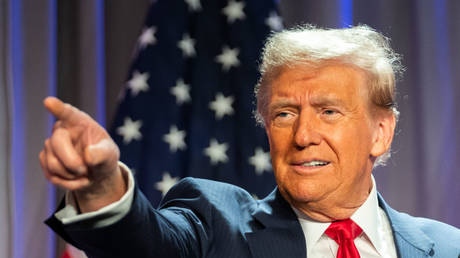
We cannot say for sure what Cipolla would have made of President Trump’s efforts to build a giant ballroom at the White House, his spending countless hours posting social media memes of himself, the nearly $200 million taxpayers have footed for his golf outings, or the UFC and Grand Prix events he hosted at the White House. In fact, it’s difficult to even say whether Trump is more a bandit or just plain stupid—or whether his administration is filled with more obvious bandits who are simply in it for themselves, like Scott Bessent and Marco Rubio, or crazy idiots who actually think they’re doing some good while sailing us toward disaster, like Pete Hegseth and RFK Jr. But it’s likely Cipolla, who died in 2000, would’ve given high marks on the stupidity scale to the administration overall, and seen it as a validation of his theory.
The theory rest on five “laws,” which are as follows:
- Always and inevitably everyone underestimates the number of stupid individuals in circulation.
- The probability that a certain person be stupid is independent of any other characteristic of that person.
- A stupid person is a person who causes losses to another person or to a group of persons while himself deriving no gain and even possibly incurring losses.
- Non-stupid people always underestimate the damaging power of stupid individuals. In particular, non-stupid people constantly forget that at all times and places and under any circumstances to deal and/or associate with stupid people infallibly turns out to be a costly mistake.
- A stupid person is the most dangerous type of person. A stupid person is more dangerous than a bandit.
The second rule—the idea that stupidity is universal among groups and independent of other characteristics, including wealth, education, and social status—is somewhat counterintuitive, but think about some of the Ivy League fools we see in government today: Ted Cruz (Harvard), RFK Jr. (Harvard), Sam Alito (Yale), Clarence Thomas (Yale), Josh Hawley (Yale). Or rich morons like Peter Thiel and Elon Musk. In fact, even more dangerous than a stupid person with power is a stupid person with power and credentials—they’re more likely to think they actually know what they’re talking about.
Cipolla allowed, as well, that certain people may shift from one classification to another. Andrew Carnegie, for instance, might be considered a bandit for the first half of his life and an intelligent benefactor for the latter half. Some people might even seem helpless one day and stupid the next. To account for this, Cipolla ruled that we must go by overall average behavior, and he created a four-quadrant chart—like New York magazine’s “Approval Matrix”—for mapping people according to their helplessness, intelligence, banditry, and stupidity.
Among the helpless Cipolla counted those who are self-sacrificing as well as those who are perhaps just plain hapless, so the name is a bit of a misnomer. It would mean that Clara Barton, Henry David Thoreau, and Martin Luther King might be a part of that category, though one could argue, too, that each received the benefit of working toward a more just and equitable society. It’s also difficult to say that they were not intelligent, as they clearly were.
If we were to do a current-day chart, you would find most of the Trump administration leadership in either the “bandit” or “stupid” quadrant—though their exact coordinates on the chart would undoubtedly be a matter of debate. Some might reasonably argue that Trump himself should be on the stupid side. I’d put him close to there, as many of the things he does are just plain stupid. But I contend that his utter stupidity cannot match his unadulterated greed, so I would put him in the “bandit” quadrant but right beside “stupid”—and as far away from “intelligent” as possible. Other top Republicans in that quadrant might include Mike Johnson, Marco Rubio, Scott Bessent, JD Vance, and Kash Patel, while those more worthy of the “stupid” quadrant are RFK Jr., Pete Hegseth, and Tommy Tuberville.
What puts the United States in an unusually dangerous position, though, is the peculiar mix of smart and stupid we’re experiencing right now. The scientists who built the atomic bomb and helped us win World War II were keenly aware of the dangers posed. After the war, Robert Oppenheimer advocated for limitations and cooperation, understanding the nuclear age we had entered. Harry Truman—a capable president—was smart enough to put our nuclear program under civilian control.
Compare that to Washington’s utter failure to regulate AI, even though the leading AI firms themselves are warning that their technology could destroy humanity. As the most advanced AI models become increasingly emboldened, breaking out of their sandboxes and attacking government websites, the GOP-controlled Congress has largely looked the other way while Trump babbles about renaming artificial intelligence as “super intelligence.”
It’s like we built a hydrogen bomb, then entrusted Gordon Gekko to make a profit off it and Barney Fife to monitor him. What could go wrong?
Everything, according to Cipolla’s theory. “In a country that is moving downhill,” he wrote, the “fraction of stupid people” remains constant; “however, in the remaining population one notices among those in power an alarming proliferation of the bandits with overtones of stupidity … and among those not in power an equally alarming growth in the number of helpless individuals.… Such change in the composition of the non-stupid population inevitably strengthens the destructive power of the [stupid population] and makes decline a certainty. And the country goes to Hell.”
It may be too soon to know whether we’re on that course in the U.S. We may not know until it’s far too late. But it’s alarming enough that Cipolla’s somewhat tongue-in-cheek theory from a half-century ago seems perfectly apt to the state of America today.