The Mac Studio, originally released in 2022, has become Apple’s premier desktop for professional users, effectively replacing the now-discontinued Mac Pro for the vast majority of workflows.
Designed for high-end workloads, the Mac Studio has emerged as a popular choice for serious AI and machine learning tasks. This is largely due to its high unified memory capacity and specialised silicon architecture, which address one of the primary bottlenecks in AI workloads: memory capacity and memory bandwidth.
If you are considering buying a Mac Studio, you may be wondering whether an update is imminent. The current lineup features M4 Max and M3 Ultra chips, introduced in March 2025. A new generation with M5 Max and M5 Ultra chips is widely expected in 2026. However, the launch timing remains uncertain. Some reports suggest a late-2026 release – possibly around October – although supply constraints affecting high-memory Apple silicon systems could influence availability and timing.
This article tracks the latest reports and rumours surrounding the next Mac Studio, including its potential release date, specifications, and pricing.
2026 Mac Studio: Release date
- Possible release in October 2026
Apple has not yet officially announced a launch date for the Mac Studio with M5 Max and M5 Ultra chips, but current indications suggest the new models are now more likely to arrive in October 2026 rather than earlier in the year.
The delay appears to be tied to ongoing supply constraints in the global DRAM market. Surging demand for AI infrastructure – particularly from hyperscalers operating large-scale data centres – has placed significant pressure on high-capacity memory supply.
According to Bloomberg’s Mark Gurman, reporting in April, “supply chain snags” are affecting production of Apple’s next-generation professional Macs, potentially pushing the Mac Studio launch into October 2026.
These constraints are already affecting the current Mac Studio lineup. In March 2026, Apple removed the 512GB unified memory upgrade option for the M3 Ultra Mac Studio and increased the price of the 256GB option by $400, likely reflecting rising DRAM costs.
As of May 2026, the 2025 Mac Studio can only be configured with 36GB, 64GB or 96GB of unified memory, with the former 128GB and 256GB upgrade options no longer available. Availability has also been impacted, with delivery estimates ranging from six to 10 weeks depending on configuration.
Earlier reports had pointed to a significantly earlier launch window. In November 2025, Gurman reported that internal Apple release schedules targeted the first half of 2026 for the M5 Max and M5 Ultra Mac Studio models. Industry analysts also expected Apple to unveil the systems around WWDC in June 2026, following the precedent set by the M2 Max and M2 Ultra Mac Studio launch at WWDC 2023.
However, current supply-chain conditions now make a later 2026 launch appear more likely.
2026 Mac Studio: Processor
- Expected to feature M5 Max and M5 Ultra chips
Apple
The Mac Studio currently ships with Apple’s M-series Max and Ultra chips. The 2025 Mac Studio launched with the expected M4 Max chip, but the highest-end configuration surprisingly used an M3 Ultra instead of a newer M4 Ultra. While the M3 Ultra is technically faster than the M4 Max, it is based on an older generation of Apple silicon, and Apple has not explained why an M4 Ultra was never released.
That situation is unlikely to repeat with the next generation. Reports suggest Apple has canceled development of the M4 Ultra entirely, meaning the upcoming Mac Studio will skip that chip generation.
Instead, the next Mac Studio is expected to feature:
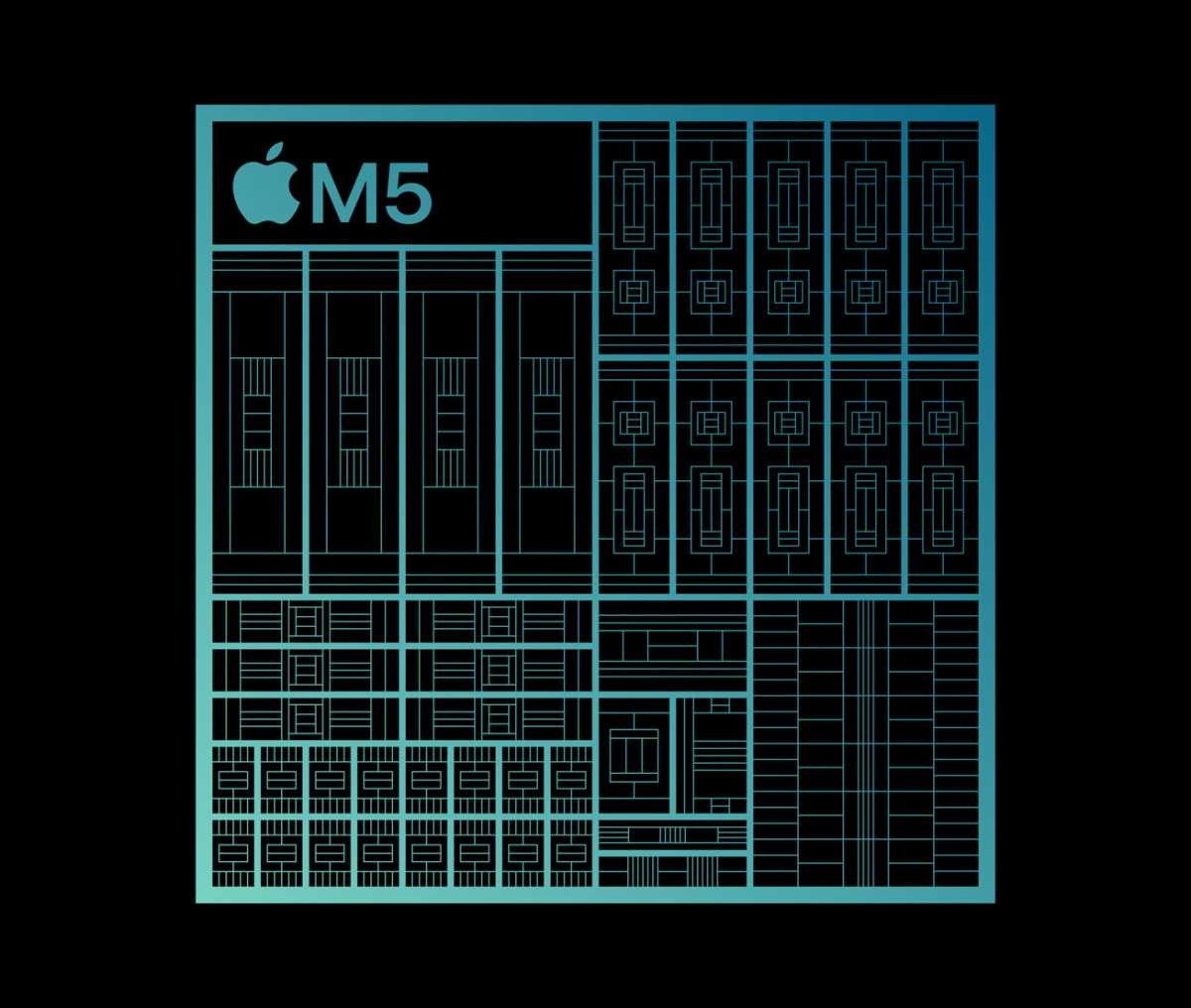
M5 Max: Likely built on Apple’s new Fusion Architecture, first introduced in the 2026 MacBook Pro lineup. This architecture combines two 3nm dies into a unified system-on-a-chip (SoC), allowing more flexible core configurations and improved performance scaling.
M5 Ultra: Expected to remain Apple’s most powerful desktop silicon, potentially continuing Apple’s apparent two-year release cadence for Ultra-tier chips.
Bloomberg’s Mark Gurman claims that Apple plans to offer both the M5 Max and M5 Ultra in the next Mac Studio. MacRumors also reported in December 2025 that references to Mac Studio models powered by the M5 Max and M5 Ultra appeared in leaked Apple files.
As of March 2026, Apple has officially launched the M5 Max as part of its latest MacBook Pro lineup, while the M5 Ultra remains unreleased but widely expected to debut in a new Mac Studio later this year.
M5 Max specifications
- CPU: The chip features an 18-core CPU, including 6 “super cores” (a rebranded version of Apple’s performance cores optimized for leading single-thread speeds) and 12 additional performance cores designed for multithreaded professional workloads.
- GPU: The M5 Max is available with either a 32-core or 40-core GPU. Each GPU core now includes integrated Neural Accelerators, significantly improving AI and machine-learning workloads.
M5 Ultra specifications (projected)
Although Apple has not yet officially announced the specs for the M5 Ultra, it is expected to follow Apple’s established approach of combining two Max chips into a single processor.
Because an Ultra chip effectively links two Max dies together, the M5 Ultra could potentially deliver:
- CPU: Up to a 36-cores.
- GPU: Up to an 80-cores.
If those projections hold, the M5 Ultra would significantly outperform the current M3 Ultra, which still leads the M5 Max in graphics-heavy benchmarks due to its higher GPU core count.
The M5 Ultra is widely expected to reclaim Apple’s GPU performance lead while delivering substantial gains in CPU and AI performance, making it the centerpiece of the next Mac Studio.
2026 Mac Studio: Other specs
- Bigger SSD expected as standard

Thomas Bergbold
The introduction of the M5 Max chip with the 2026 MacBook Pro offers some insight into what we might expect from the same generation of Mac Studio.
Increased memory bandwidth: The base M5 chip already delivers a 28 percent improvement in memory bandwidth over the M4, reaching 153GB/s. It is expected that the M5 Max and M5 Ultra variants in the Mac Studio will see proportional increases in their respective bandwidths. The high-end configuration is likely to support up to 128GB of unified memory with 614GB/s of memory bandwidth, enabling demanding workflows such as 3D rendering, large-scale video editing, and AI development.
Increased SSD speeds: Testing of the M5 Max architecture in other devices has revealed impressive disk speed results, as noted in our 16-inch MacBook Pro (M5 Max) review. Faster read/write speeds and improved performance with large files should be expected.
Connectivity: The platform supports Thunderbolt 5 (80–120Gbps bandwidth), Wi-Fi 7, and Bluetooth 6, enabled by Apple’s new N1 networking chip.
Anticipated improvements include:
RAM allocation: Base memory is likely to remain at 36GB for the M5 Max and 96GB for the M5 Ultra. The maximum capacity for the Ultra will likely remain at 256GB, although supply constraints could influence configurations.
Storage capacities: The M5 Max is expected to start at 1TB, up from 512GB. The M5 Ultra may start at 2TB, up from 1TB. Maximum storage capacities will likely remain at 8TB for the Max and 16TB for the Ultra.
2026 Mac Studio: Design & Ports
- No changes expected
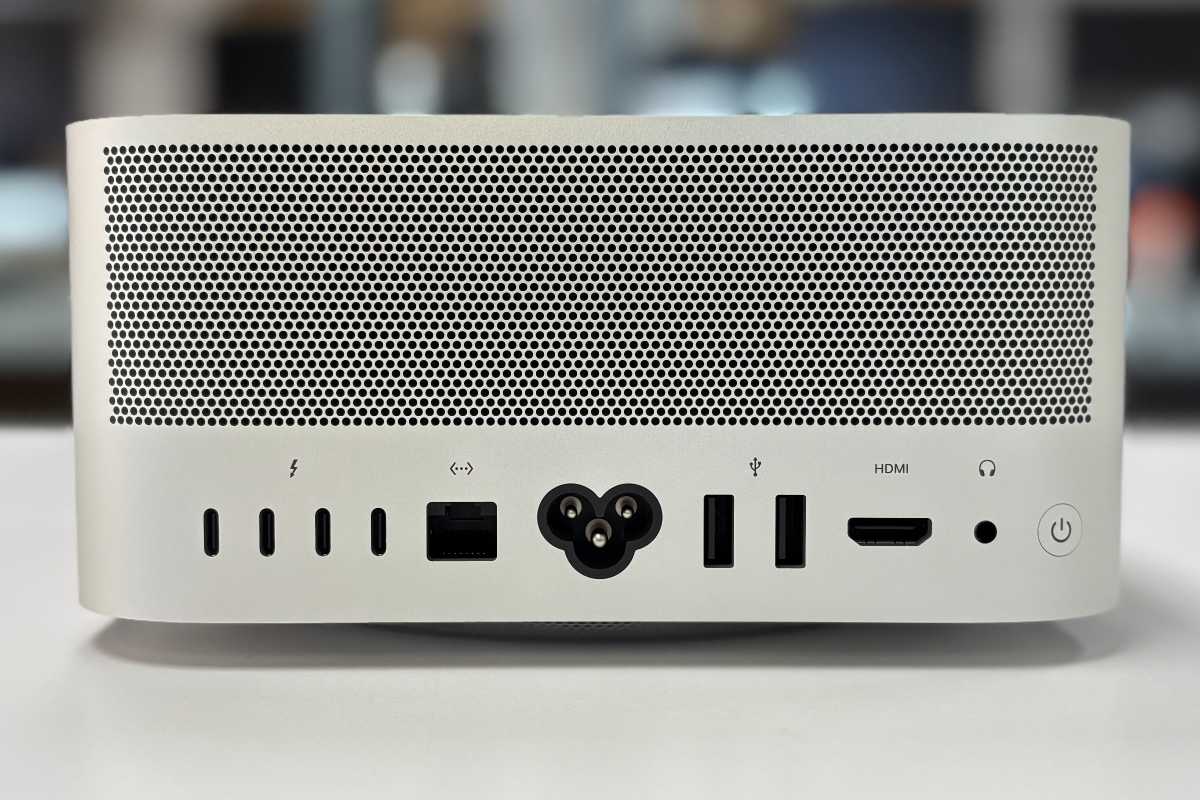
The Mac Studio was introduced in 2022. Apple is expected to stick with the same design, which is also reflected in the M4 Mac mini, as no reports have been made about the design.
Foundry
The Mac Studio’s compact yet thermally efficient design makes it particularly well suited to AI developers, creative professionals, and rack-based deployments.
By prioritising thermal efficiency, port accessibility, and a space-saving footprint, the Mac Studio addresses the practical demands of modern production environments, fitting easily into cramped studio spaces while delivering performance that rivals or exceeds much larger workstations.
Unlike many modern Apple devices that emphasise minimalism, the Mac Studio offers a plentiful selection of ports designed for complex professional workflows, reducing reliance on external dongles and adapters. Front-facing Thunderbolt and USB-C ports, alongside the SDXC card slot, provide convenient access for photographers, videographers, and developers who frequently swap storage media and peripherals.
The Mac Studio offers support for up to eight external displays enables extreme multitasking, while Thunderbolt 5 in newer models delivers up to 80Gbps bandwidth – or 120Gbps for video workloads – making the system particularly well suited to high-end production and AI workflows.
The chassis itself is built around a large cooling system, with a ring of air vents at the base allowing the machine to sustain demanding tasks such as AI inference, 3D rendering, and video production without the excessive fan noise common in traditional workstations, an advantage especially valued in sound-sensitive studio environments.
The port offerings are also expected to remain the same. The Mac Studio has:
- M-series Max model: 2 front USB-C ports (supporting USB 3 at 10Gbps)
- M-series Ultra model: 2 front Thunderbolt 5 ports
- front SDXC Card slot
- rear 3.5mm audio jack
- 4 rear Thunderbolt 5 ports
- 2 rear USB-A ports
- HDMI port
- 10Gb ethernet port
2026 Mac Studio: Price
The Mac Studio currently starts at $1,999 / £2,099, but there are strong indications that Apple could raise prices when it updates its desktop lineup later this year due to supply chain pressures and rising component costs.
One sign that the Mac Studio’s price could increase is Apple’s recent move to raise the entry cost of its high-end Macs. In March 2026, Apple removed lower-capacity storage tiers from the MacBook Pro lineup, pushing the starting price of the M5 Max model to $3,599 because it now ships with a 2TB SSD by default.
If Apple follows the same strategy with the Mac Studio, it may raise the base price while simultaneously increasing the starting RAM and storage configurations to soften the perception of the price increase.
For example, if Apple increases the entry-level SSD from 512GB to 1TB – a likely change – the base price could rise by roughly $200 / £200, although the U.K. increase may be smaller to keep regional pricing more closely aligned.
Several broader factors could also contribute to higher prices:
RAM shortage and component costs: A global surge in demand for AI hardware has created significant pressure on memory supply, leading to higher RAM prices across the industry.
Supply chain constraints: During a 2026 earnings call, Apple CEO Tim Cook said the company is seeing “less flexibility in the supply chain than normal,” adding that wholesale memory pricing is “increasing significantly.”
For reference, the current 2025 Mac Studio base configurations are priced as follows on Apple’s website:
- $1,999/£2,099/CA$2,699/AU$3,499 M4 Max, 36GB Unified Memory, 512GB SSD
- $3,999/£4,199/CA$5,499/AU$6,999 M3 Ultra, 96GB Unified Memory, 1TB SSD
Historically, Apple has shown a willingness to raise starting prices when transitioning between generations. The Mac Pro, for example, increased from $5,999 to $6,999 when Apple Silicon replaced Intel processors.
However, Apple has also positioned the Mac Studio as a relatively affordable high-performance desktop for creative professionals. Since its introduction, the machine has started at $1,999, helping maintain a clear price gap below the $3,199-plus MacBook Pro lineup.
Should you buy a Mac Studio now or wait?
Whether you should buy a Mac Studio now depends on how urgently you need the performance versus whether you are willing to wait for the next generation of Apple silicon.
The Mac Studio was last updated in March 2025 with the introduction of the M4 Max and M3 Ultra chips. Since then, Apple has released the MacBook Pro with the M5 Max. According to our testing, the M5 Max now surpasses the M3 Ultra in CPU performance, although the M3 Ultra still maintains an advantage in certain graphics-intensive workloads thanks to its significantly higher GPU core count.
If you need a high-end workstation immediately, the Mac Studio remains Apple’s most powerful desktop Mac. However, availability has become increasingly limited due to ongoing component shortages. As of May 2026, delivery estimates for some configurations stretch to as long as 10 weeks, meaning orders placed now may not arrive until July 2026.
At the same time, an M5 refresh now appears increasingly likely for October 2026. The next-generation Mac Studio is expected to deliver a substantial performance improvement, particularly with the anticipated M5 Ultra chip, which could represent a significant leap over the current M3 Ultra.
As a result, buyers who can wait a few more months may be better off holding off for the next generation.
For those who need a Mac Studio sooner rather than later, a refurbished model could be a good alternative and may also offer better value for money. Read: Best place to buy a refurbished MacBook or Mac for advice.
FAQ
When will the M5 Mac Studio be released?
While some early 2026 reports pointed to a spring launch, ongoing supply-chain issues appear to have pushed the timeline back, with an October 2026 release for the Mac Studio with M5 Max and M5 Ultra chips now looking more likely.
Will the M5 Mac Studio have an M5 Ultra chip?
Yes. Industry reports and expert predictions strongly suggest the new Mac Studio will feature an M5 Ultra chip.
Will RAM shortages make the M5 Mac Studio more expensive?
The global RAM shortage has lead to increased costs for memory components. While it is difficult to predict exactly how this will impact the final retail price of future Mac Studio models, such as those featuring the M5 chip, the shortage has created significant upward pressure on production costs.
While Apple has a history of maintaining consistent pricing across product generations, the current supply chain environment presents unique challenges.
Rather than raise prices in relation to the RAM shortages, Apple may instead withdraw the entry-level model, as it has with the Mac mini.
Could Apple redesign the Mac Studio chassis for the M5 generation?
It’s not expected that Apple will alter the external design of the Mac Studio. The current design has a number of benefits including:
- A tall aluminium chassis allowing for a much larger cooling system than a Mac mini or MacBook Pro.
- A small footprint that means multiple units can be deployed side-by-side on shelves or mounted in custom rack trays. This is attractive for AI labs, CI infrastructure, edge inference clusters, and build farms.
- The front-facing I/O is also appreciated by those who need to attach high-speed external storage, networking, and accelerator peripherals.
How well will the new Mac Studio handle AI workloads?
The new Mac Studio is expected to be one of the most capable desktop systems for local AI workloads, particularly with the upcoming M5 Ultra chip. Apple’s unified memory architecture allows the CPU and GPU to share a large pool of high-bandwidth memory, making the system especially effective for running large language models locally. Combined with faster GPU-based AI accelerators, improved memory bandwidth, quiet cooling, and support for up to 256GB of unified memory, the M5 Mac Studio could become one of the most powerful compact AI workstations available.
The Mac Studio is already widely regarded as a premier workstation for artificial intelligence, with recent developments further enhancing its suitability for complex AI clusters and high-performance machine learning workloads. In November 2025, Apple introduced enhancements to macOS Tahoe 26.2 specifically aimed at AI developers using Mac Studio systems. One of the most significant additions was support for creating AI clusters over Thunderbolt 5, simplifying deployment by eliminating the need for RDMA Ethernet cards or optical networking modules.
The Mac Studio’s hardware design is also particularly well suited to demanding AI workflows. Its compact yet thermally efficient chassis enables sustained high performance during tasks such as LLM inference, model training, and multimodal processing, while maintaining significantly quieter operation than traditional workstation or server hardware.