World Food Safety Day is June 7, 2026
Every few years a number comes along that stops me cold, even after three decades of doing this work. This week, that number is 866 million.
That is how many people the World Health Organization estimates get sick from unsafe food every single year. And 1.5 million of them die. The new WHO estimates, published this week in The Lancet Global Health and timed to World Food Safety Day on June 7, are the most complete accounting of the global toll of foodborne disease we have ever had. They cover 42 hazards — bacteria, viruses, parasites, and, for the first time on this scale, chemical contaminants like arsenic, lead, and methylmercury — across 194 countries from 2000 through 2021.
I have spent my entire career representing the people behind statistics like these. The toddler with hemolytic uremic syndrome on dialysis after eating a hamburger. The grandmother who never came home from the hospital after a Listeria-contaminated cantaloupe. The families I have sat with in living rooms across this country who had no idea that a meal could take everything from them. So, when WHO puts a number like 866 million on the table, I don’t see a spreadsheet. I see 866 million living rooms.
The part that should make all of us angry
Here is what I cannot get past: children under five are only about 9% of the world’s population, but they account for nearly a third of all foodborne illness — and they bear a brutal share of the deaths, mostly from diarrheal disease. The smallest, most vulnerable people on earth are paying the highest price for a problem we know how to prevent.
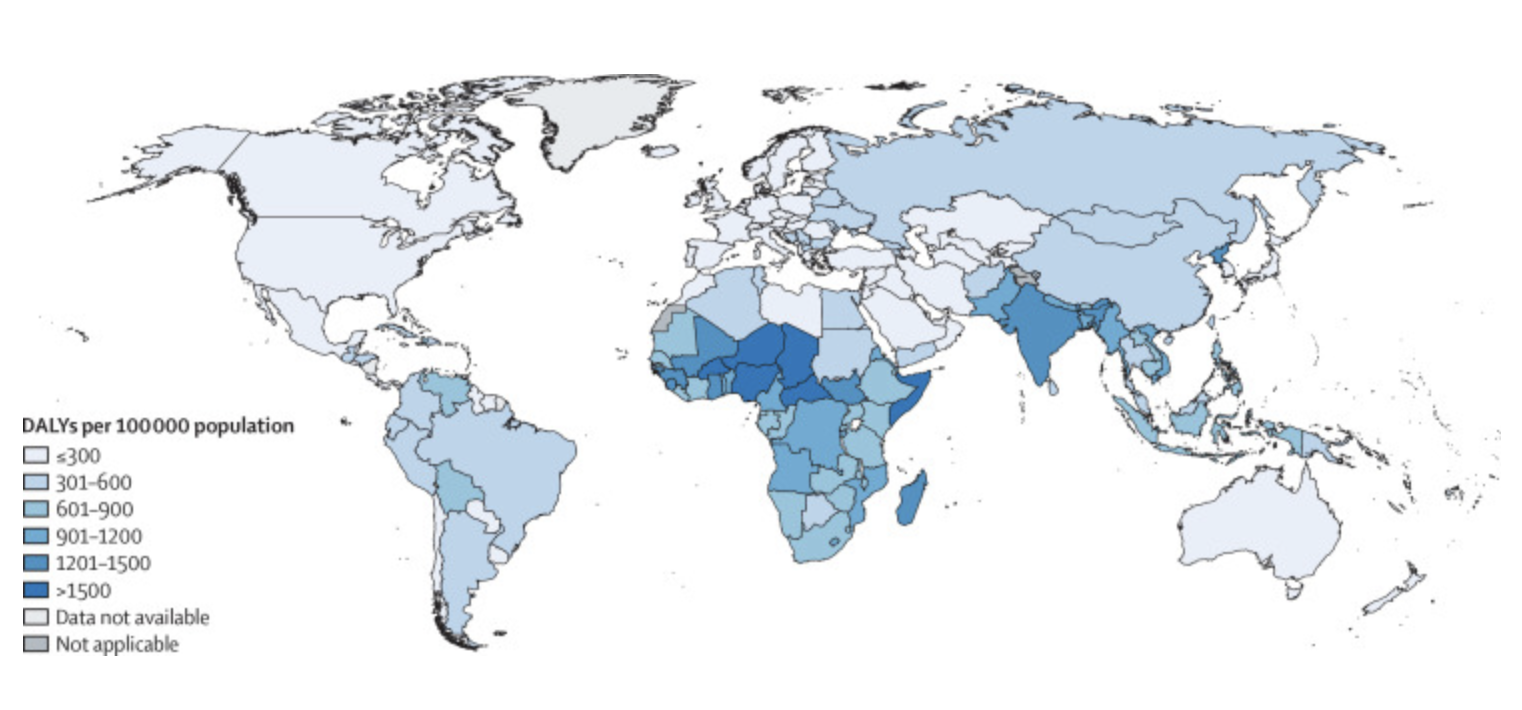
And it is wildly unequal. WHO found that Africa and South-East Asia together carry roughly three-quarters of the world’s foodborne illnesses and about 60% of the deaths. A child’s risk of dying from contaminated food has nothing to do with what the child did, and almost everything to do with where that child was born — whether there is clean water, reliable refrigeration, basic sanitation, and a doctor within reach.
There is one bright spot worth saying out loud: the overall burden has actually come down since 2000. That matters. It tells us this is not hopeless. It tells us that investment, surveillance, and basic public health work. We are not pushing against the laws of physics here. We are pushing against neglect, underfunding, and the silos we keep building between the people who could fix this.
It is not just bugs anymore
For most of my career, my world has been the pathogens — E. coli O157:H7, Salmonella, Listeria, Hepatitis A, Cyclospora. They still cause the overwhelming majority of illnesses, and they always will be my fight.
But the new estimates make a point I think too many of us have ignored: while chemical contaminants cause only a small slice of foodborne illnesses, they were responsible for the majority of foodborne deaths in 2021 — most of it traced to inorganic arsenic and lead. Once those metals are in the food chain, you often cannot get them back out. That is heart disease, cancer, and irreversible damage to children’s developing brains, served up at the dinner table. It means food safety can no longer be carved up neatly between “the outbreak people” and “the environmental people.” It is all one problem.
What “working together” actually has to mean
WHO calls the answer a “One Health” approach — connecting human health, animal health, plant health, and the environment, and breaking down the walls between the health, agriculture, and environment sectors. I’ll put it more plainly: nobody owns this problem alone, which is exactly why it never gets fully solved.
The grower blames the processor. The processor blames the distributor. The regulator is underfunded and stretched thin. The litigation — my world — comes in at the very end, after the harm is already done. I have made a career out of being the last line of accountability, and I will tell you the truth I have told audiences for years: I would happily be put out of business. Every case I file is a case somebody, somewhere, could have prevented.
Working together means a few concrete things:
• Prevent at the source. Better agricultural practices, stricter industrial controls, and real environmental regulation, so contamination — biological or chemical — never reaches the food in the first place.
• Fund the basics. Clean water, sanitation, pasteurization, refrigeration, and access to care. These are not exotic technologies. They are the difference between a sick child who recovers and one who doesn’t.
• Invest in surveillance. You cannot fix what you cannot see. The reason we now have these numbers at all is that scientists did the unglamorous work of counting. Climate change is raising contamination risk, and antimicrobial resistance is making infections harder to treat — we need more eyes on this, not fewer.
• Stop treating food safety as somebody else’s department. Industry, government, public health, and yes, the trial bar all hold a piece of it.
This touches every meal
WHO’s Director-General said something this week that I wish I had said first: food safety is not an abstract issue — it touches every meal, every family, every day. The senior author of the paper put it even more bluntly: “Delay costs lives.”
I have spent more than thirty years watching what delay costs, one family at a time. The new estimates simply put a global number on what I have seen in living rooms and hospital rooms and, too often, at gravesides.
866 million illnesses. 1.5 million deaths. A burden that rivals tuberculosis, HIV, and malaria. And the single most important thing to understand about all of it is this: it is preventable. Not someday, not in theory — with the knowledge and tools we already have in hand.
So, as World Food Safety Day approaches, my ask is simple. Whether you grow food, process it, sell it, regulate it, study it, or just feed your family with it — this is your problem too. Let’s stop pointing at each other across the silos and start working like the lives of 866 million people depend on it.
Because they do.