- Android’s earthquake warnings reached 11.4m Venezuelans last week
- The feature is now installed on 2.5 billion Android phones
- If you live in a country covered by the feature, it should be enabled by default
Since 2021, Android phones have come with a built-in earthquake detection feature — and according to Google’s figures, it was able to give 11.4 million people advance warning of the devastating double earthquakes that hit Venezuela on June 24.
That number comes from the New York Times, with the early alert arriving up to two minutes before the earth started trembling. The first alerts were dispatched just nine seconds after the earthquake started underground, according to Google.
The system works by using the accelerometers built into Android phones to detect faster, milder seismic waves known as p-waves. This data is automatically anonymized and reported in the background to Google, and once there are enough matching reports, an alert gets pinged out to all Android users who might be affected.
Phones have to be stationary to qualify as earthquake detectors — measurements from phones on the move aren’t counted — and the earthquake has to be a magnitude 4.5 or greater to trigger a warning. For more densely populated areas, with more Android phones in them, the alerts get pushed out more quickly.
In three specific US states — California, Washington, and Oregon — the Android warnings rely on actual seismic monitoring data from a network of 1,675 sensors that make up the ShakeAlert system, run by the US Geological Survey.
How to enable earthquake warnings
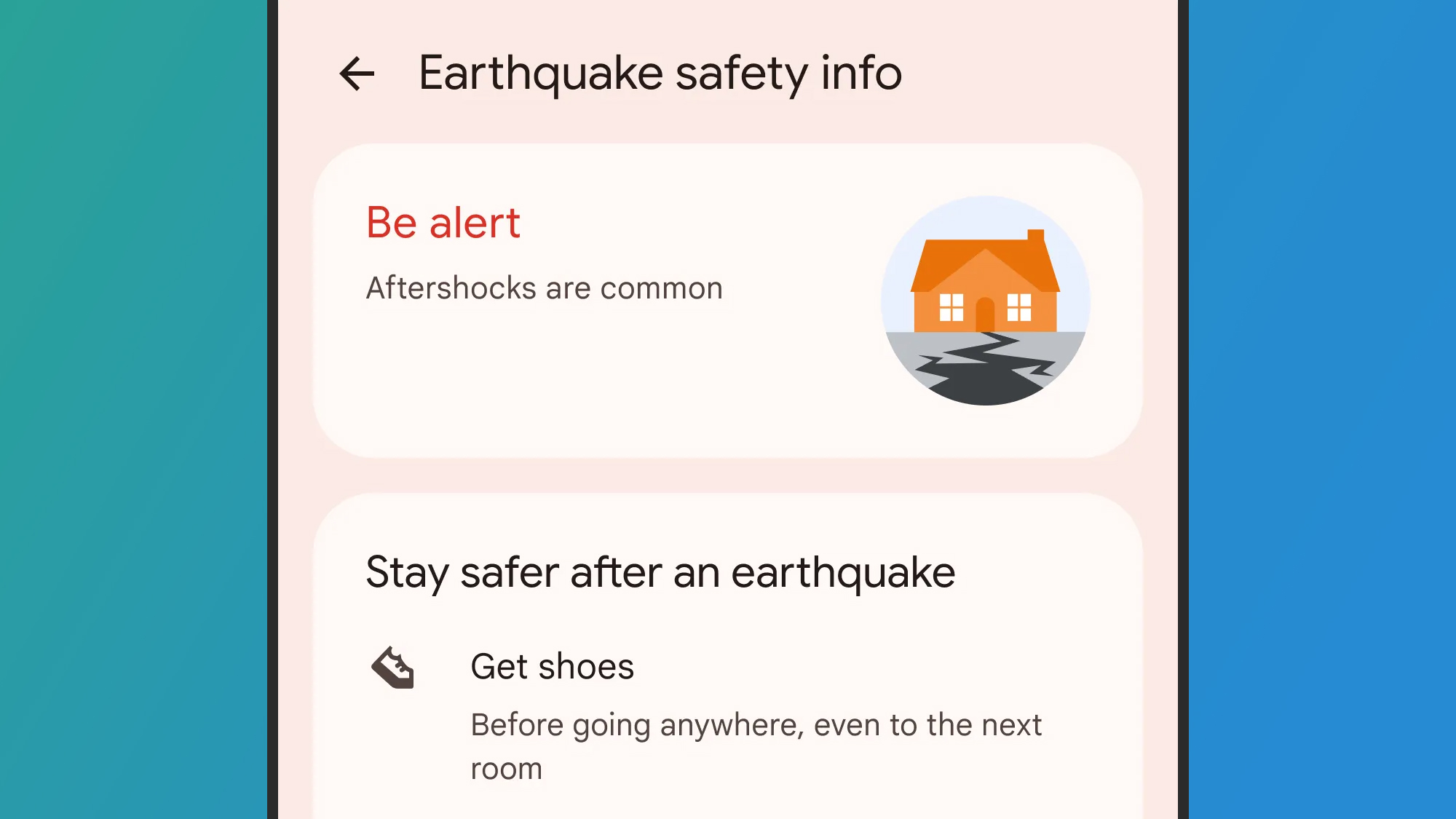
The Android Earthquake Alerts System is enabled by default on modern Android phones: to check from Settings, tap Safety and emergency then Earthquake alerts. You do need to be in one of the 98 supported countries though, listed by Google here, which include Australia and the United States.
How close you are to the epicenter affects the alerts you see in the event of an earthquake. The most serious warnings will break through any Do Not Disturb settings you’ve got in place, take up the full screen, and play a loud sound. If less serious shaking is expected, you might just get a normal pop-up notification.
As of last year, Google says the Android Earthquake Alerts System has detected more than 18,000 earthquakes worldwide, and sent out over 2,000 alerts. The feature means that at least 2.5 billion people worldwide have access to an earthquake early warning system, even if nothing is in place at the government level.
This isn’t something you can currently get on iPhones however, not even with a Google app. What iOS can do is pass on official warnings from authorities, including for earthquakes: From Settings, tap Notifications, and you’ll see toggle switches for Extreme Alerts and Severe Alerts.
It’s not clear how many deaths or injuries may have been prevented by the Android warning system in the case of the Venezuela quake, but it seems millions got alerts at least a few seconds in advance that something was about to happen.