A circuit breaker, bring back hope, do better – that’s what Andy Burnham promised Britain on Monday when he was sworn in as the new UK Prime Minister. And the digital rights community was watching closely as the seventh to stand in front of Downing Street in 10 years made his big, first-day promises. What will Burnham have planned for his predecessor’s divisive digital privacy policing?
It turned out that the tech world didn’t have to wait long for the answer. In fact, on the previous Saturday, Burnham had already made almost three million Britons happy with the news that he would scrap the controversial national digital ID plan.
The new PM then sent shockwaves across the political benches on his first day in charge, when he dismantled the Department for Science, Innovation and Technology (DSIT) after only three years of service and merged it with the Business Department.
The question now is whether Burnham’s impetus for change will address the issues at the heart of the digital privacy debate.
According to the Policy and Campaigns Officer at Liberty, Anna Cardoso, the newly-formed cabinet now has the opportunity to set out a positive vision for tech.
“We hope to see a human-centred approach to digital policy that puts people, privacy and fundamental rights at its core,” Cardoso told TechRadar.
But what changes do digital privacy experts exactly hope for? What might a “human-centred approach” really look like? And how likely is the new government to live up to the expectation?
Does Andy Burnham mean an end to Digital ID cards?
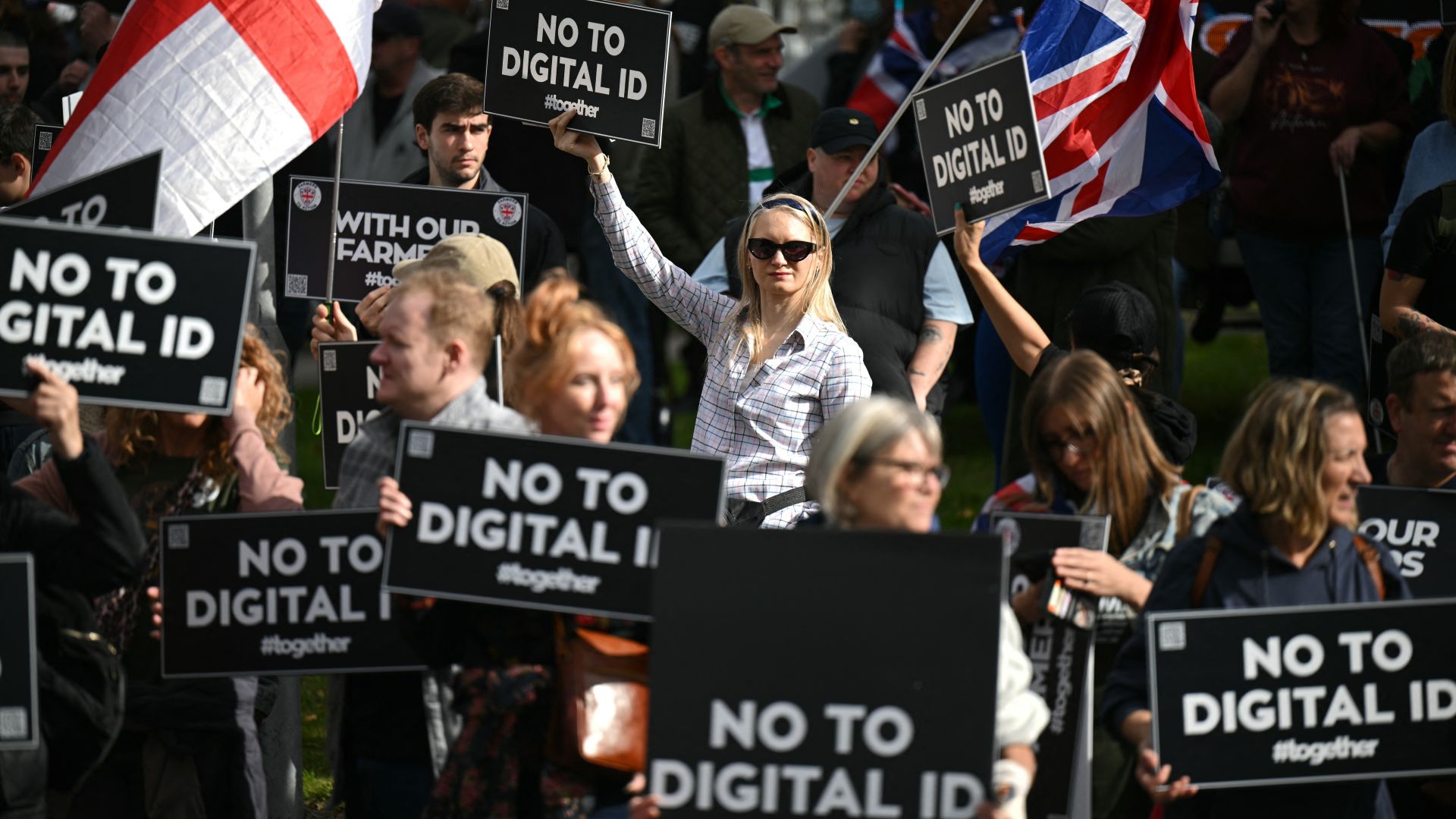
Keir Starmer’s BritCard was an unpopular policy among privacy-conscious citizens. Opponents to the programme then welcomed with excitement Burnham’s decision to finally send the UK digital ID to the grave.
“We’ve done it,” wrote Big Brother Watch’s Director, Silkie Carlo, in a celebratory post on X, while Akiko Hart, Director at Liberty, called the move “a victory for civil liberties in the UK.”
But Burnham’s motivations to kill the proposal don’t exactly come from privacy concerns. His decision was one of economics. Axing the BritCard means freeing up an estimated £600 million a year — from a policy no one wants — and using it for something citizens desperately desire, such as more support with the cost-of-living crisis.
In fact, Burnham told the Financial Times that he’s not “arguing against the principle”. After all, he was a supporter of Tony Blair’s Identity Cards Act back in 2006.
“I think there’s a risk of an opportunity-cost situation here where something can consume a huge amount of time and actually doesn’t come through,” he told the newspaper.
Does this mean that another form of BritCard be brought back when the time is right? Possibly.
Some commentators are already speculating that online ID checks may find a way to stick around.
Speaking with Al Jazeera, Alan Miller, co-founder of the campaign group Together, argues that other online government systems could evolve into a “de facto digital ID through creeping expansion”.
Cardoso from Liberty agrees that killing one proposal isn’t enough to sweep away all the concerns about digital forms of identification. Yet, she still considers it a huge step in the right direction. She told TechRadar:
“Whether or not digital ID returns in another form, any future proposal would need to demonstrate a clear public benefit, strong privacy protections, meaningful safeguards and robust democratic scrutiny. Those principles should apply regardless of who is in government.”
Will Burnham really scrap Palantir’s NHS deal?
The government’s £330 million contract with Palantir to build the NHS’s new Federated Data Platform (FDP) has also been a concern for Britain’s privacy-conscious citizens. Whether the wave of division on the subject has been one of geopolitics, morality or technical usability, data protection is at its core.
Some reports suggest that Burnham is already considering scrapping Palantir’s NHS contract. Something that, according to Palantir UK CEO Louis Mosley, “would be a terrible mistake”.
While nothing is as yet confirmed, the Head of Tech and Data at Good Law Project, Duncan McCann, sees the political reshuffle as the best chance for the group’s campaign to remove Palantir from the UK’s healthcare system to succeed, commenting to TechRadar that Burnham now represents “a beacon of at least an opportunity”.

Burnham’s track record in this area looks hopeful, too. During his almost decade as Mayor of Greater Manchester, municipal or public health departments did not award any contracts to the US surveillance tech giant.
And while McCann explains that Burnham may not necessarily be the one to credit for the decisions the city’s public sector took on Palantir, it is an opportunity for hope of change at a national level.
As reported by Al Jazeera, Manchester’s NHS leaders spent six years building their own analytics infrastructure instead of adopting Palantir’s FDP system, something that for Palantir critics became proof that effective NHS data management can be achieved without the help of the American company.
“It offers some real opportunity to show Manchester as an innovation hub,” explained McCann, saying that the Good Law Project remains hopeful that this could fit well on Burnham’s political agenda.
“It proves that we can do it ourselves and save money by doing that, while creating new jobs.”
The Prime Minister’s press office has already confirmed to reporters the guiding principle remains “getting value for money for the taxpayer” alongside the “need to be safeguarding people’s data and British interests”, both of which fit neatly into McCann’s hopes.
As with the BritCard, then, it could be the financial angle that leads the digital rights community to have their concerns on Palantir and patients’ privacy finally addressed.
Don’t expect much change to the UK’s approach to children’s online safety
Keir Starmer dropped a digital rights bombshell in his last days of governance — an upcoming under-16s social media ban that privacy experts have already dubbed “a cybersecurity disaster waiting to happen“.
But don’t expect Andy Burnham’s rise to power to change much here.
In an interview with The Times in April 2025, Burnham talked about the urgency to regulate social media platforms for teens. A concept he reiterated more recently, when he backed the Tories’ call for a ban on under-16s from social media last January — as reported by The Guardian.
According to Policy Manager at the Open Rights Group, James Baker, that’s a clear sign that policies on social media will most likely remain unchanged.
“However, I’m not convinced it’s going to work because it doesn’t tackle the underlying root cause of what makes these platforms harmful,” Baker told TechRadar, adding that evidence coming from Australia shows that young people can easily circumvent restrictions.
Baker argues that to really reassure British parents over their children’s online safety, we need a complete shift in policy.
“We need to tackle structural causes for harm instead, like the advertising business model causing platforms to come up with harmful loops that keep people online as long as possible,” Baker told TechRadar.
That said, it also looks unlikely that Burnham will address privacy advocates’ concerns on mandatory age verification.
Back in 2016 — during the discussions around the controversial Investigatory Powers Act — Burnham took a strong stance against what he defined as “simplistic loyalties to the security or privacy lobbies”, arguing that “such debates are pitched as a clash between two absolutes of privacy and security, where there can be no compromise and only one winner”.
Baker agrees that the new Prime Minister probably isn’t going to be a huge supporter of privacy causes. But he remains hopeful.
“So much time and energy has been spent trying to solve online safety with policies that haven’t actually worked. Perhaps he will take a more pragmatic look and consider other, more cost-effective measures.”
Again, economics may prove to be the deciding factor, shifting the conversation away from policies that experts fear will threaten digital freedoms.
So, what can we expect for Burnham on digital privacy?
By binning the digital ID proposal and the entire tech ministry within his first 36 hours of leadership, Andy Burnham proved he isn’t afraid to move fast and break things. But as digital rights experts have made clear, a true ‘circuit breaker’ requires more than just stopping bad policy.
“Liberty wants policymakers to move away from a ‘technology first, questions later’ approach and instead place human rights at the heart of decision-making,” Policy and Campaigns Officer Anna Cardoso told TechRadar.
She said that the real tests are yet to come on whether the government will be “willing to grapple seriously with the risks posed by surveillance technologies, AI and large-scale data collection.”
Whether it comes from genuine concerns for digital privacy or a pragmatic way for closing the gap between politics and the public, it doesn’t much matter at this stage. If Burnham’s administration can weave privacy protections into his broader economic agenda, he might just deliver the positive vision for tech that advocates are desperate to see.
Until then, the digital rights community remains cautiously optimistic — holding its breath for the next move. As Baker from Open Rights Group puts it:
“We’ll try to give him a chance. Maybe he can do things a bit better.”