Growing up music-obsessed, my household CD collection was substantial. Along with my own music, it was largely made up of albums my parents had accumulated separately. Like a library filled with books, it unlocked an educational portal on all things music and ignited my respect for the album.
And yes, I use the best music streaming services to satisfy my daily music needs, but I’m still an album-listener, and I haven’t left physical music out of my consumption habits. That said, I’ve always imagined what it would be like to bring the nostalgia of CD-browsing into the digital era. Thankfully, Ricardo Amorim is doing just that with his start-up company Spine Music.
Launching on Kickstarter this fall, Amorim’s inaugural product is the Spine display, a digital music display you can connect to your Spotify, Apple Music, and Tidal account. But what’s impressive about Spine is that it displays all of your saved albums as if they were a CD collection, which you can browse and play through headphones and speakers.
For a company that’s so new, Amorim’s mission is tunnel vision: to reconnect people with music. As he awaits the launch of Spine, Amorim sat down with me to talk about his product in detail and why he thinks it will never replace physical music.
A display that’s been years in the making
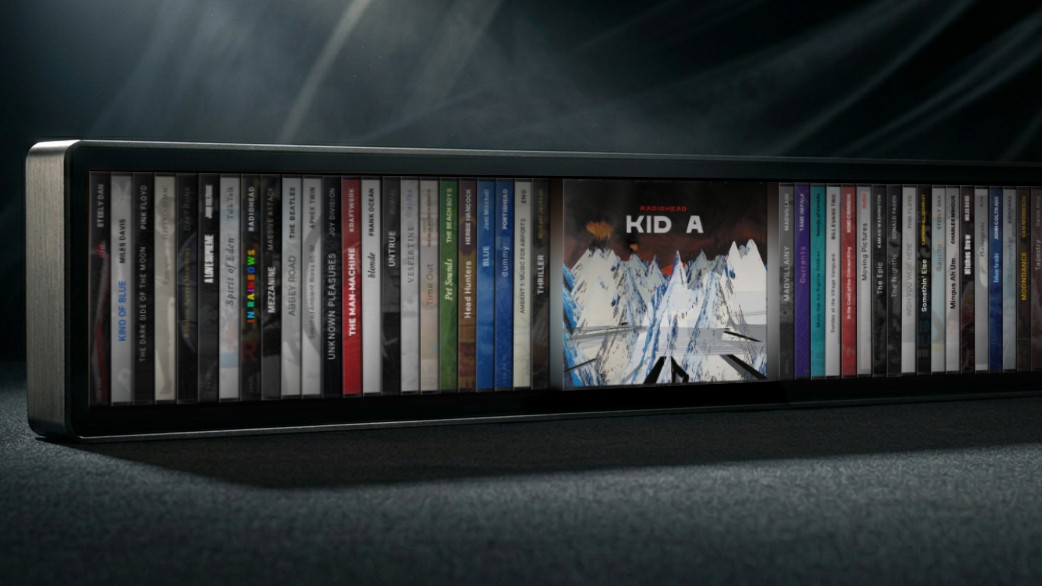
Spine was unveiled to the world just this year, but for Amorim, it’s something he’s been thinking about for a lot longer. “The idea itself is something I’ve been kicking about in my head for years,” he tells me. “It started off with me wanting to buy something like it, so it wasn’t like ‘this is a company I should start’; it was more ‘this is a product I need because I love streaming’.”
Just two minutes into our conversation, I realized Amorim and I are quite similar. We both appreciate the accessibility and convenience of music streaming, but our attachment to physical music is in our DNA. It’s what keeps us grounded. “I love everything that (streaming) brings me. I love having access to every album under the sun, but I grew up with physical music, and I missed that,” he says, and I get it.
With this in the back of his mind, it all became clear to him, as he tells me, “Surely there’s something out there that can bridge that gap.
“I left my job and said ‘you know what, if nobody’s making it, then I’ll go ahead and make it’. I went on a sabbatical starting last year and took time off to recharge and rethink what I want to do. Then Spine came up again as an idea, and I thought it was the perfect time”.
While Spine is a handy digital music shelf that gives you immediate access to your streaming library, it’s so much more than that for Amorim. “The emotional reconnection with music is what I would like Spine to be able to achieve, but not leaving behind all the benefits that streaming and technology have brought us,” he adds.
“I love streaming, but I do feel like if you truly love music and you talk about music and want to move your relationship with it beyond your phone, there are few ways of doing so.”
Album-centric with minimal features
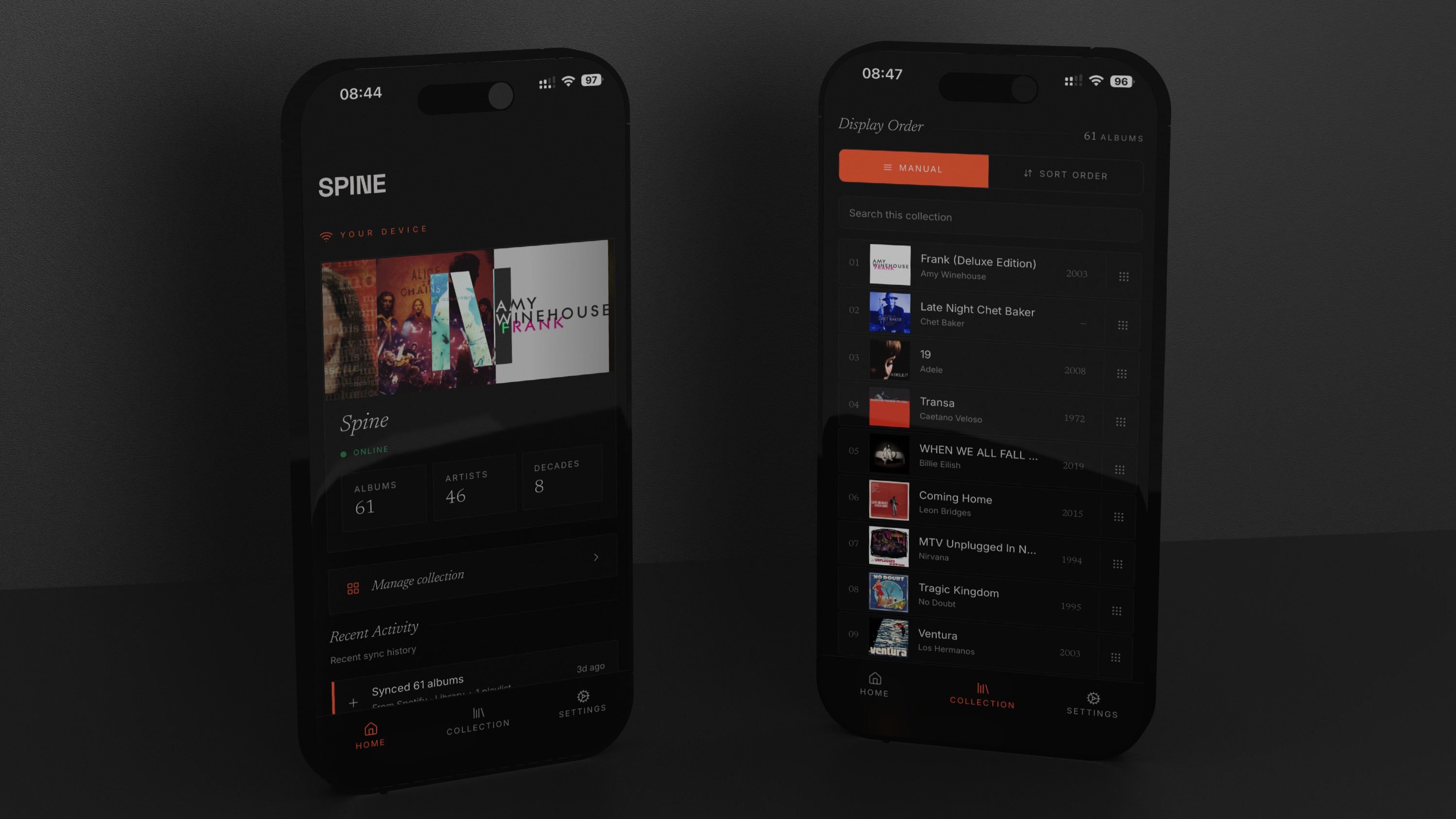
Unlike streaming platforms where the user interface is central to the experience, this isn’t a priority for Spine. Instead, Amorim argues that the device’s minimal display encourages higher levels of browsing.
“One core concept of the product is to have no UI. So we designed the whole experience to be about swiping to browse, tap to open, and tap to play,” Amorim details, adding “and there are no buttons once you’ve loaded your library in, it’s just gestures to protect the music”.
The other core concept is to spotlight albums in all their glory, which I raise my glass to. “You can import your playlists, but Spine will behave like a music shelf that displays albums. So, say you import your late-night jazz playlist, it’ll pull up all the relevant tracks that are part of that playlist and display that,” he tells me.
“There’s something different about listening to an album end-to-end that an artist puts so much effort into thinking about. That’s what I wanted to project, hence why there’s a deliberate decision in trying to maintain that conceptual connection with a music shelf”. It’s music to my ears.
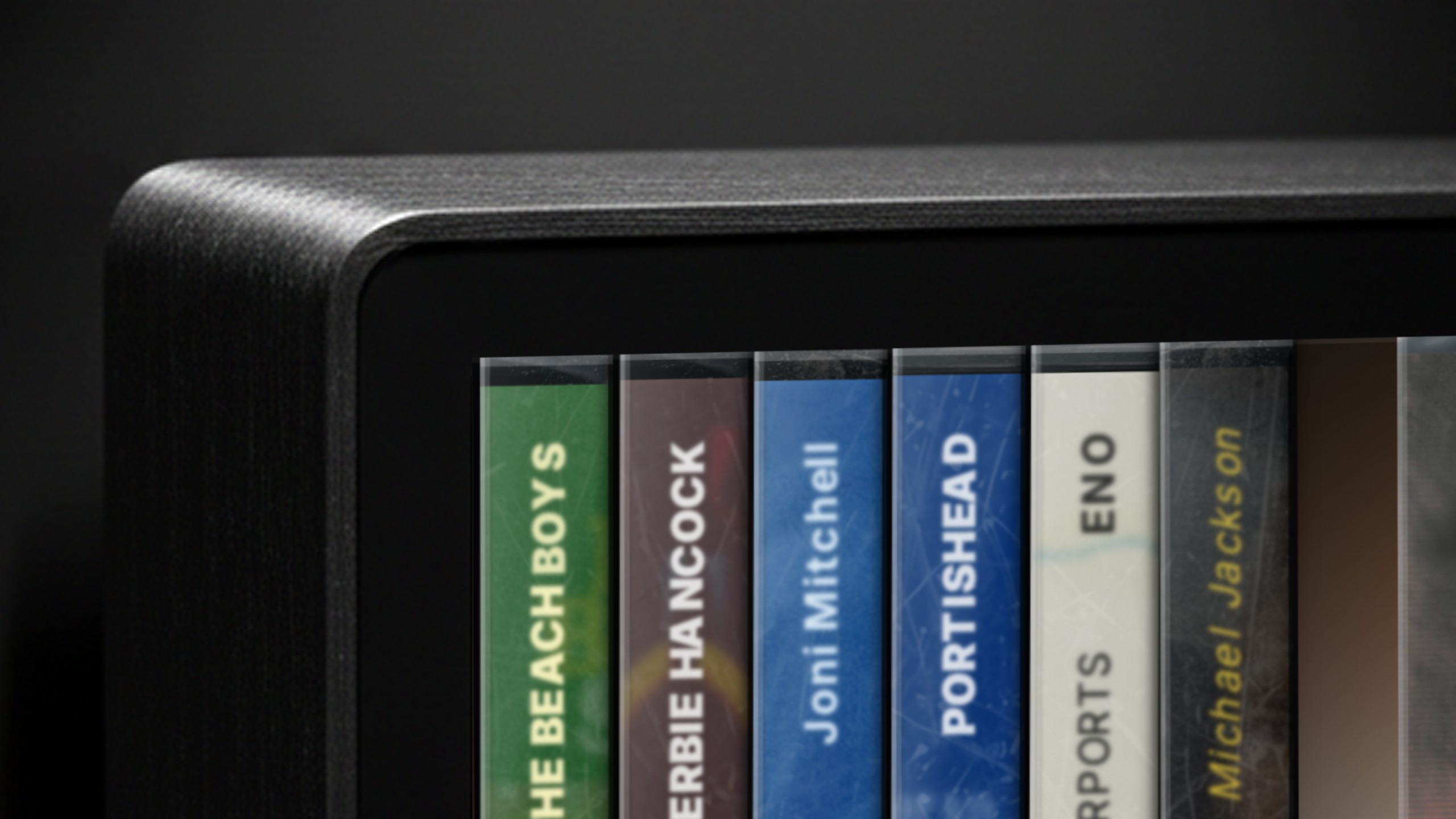
But there’s one thing Amorim wants to be clear about: Spine is a display, not a player. When you select an album from your collection on Spine, the rest is done through your streaming service of choice, meaning it doesn’t render audio files.
“Spine will trigger the beginning of an album or play something through your streaming service, and then the streaming service will own the relationship with where it goes to play and so on. Once you have that concept in mind, then it’s not about queuing, it’s about browsing and starting the listening journey,” Amorim tells me, and there’s one particular reason for this.
“People have invested a reasonable amount of money in their own audio gear and hi-fi gear, so it doesn’t make sense to me to try to replace that. I feel like we have a different job to do”.
Physical music is never out of the question
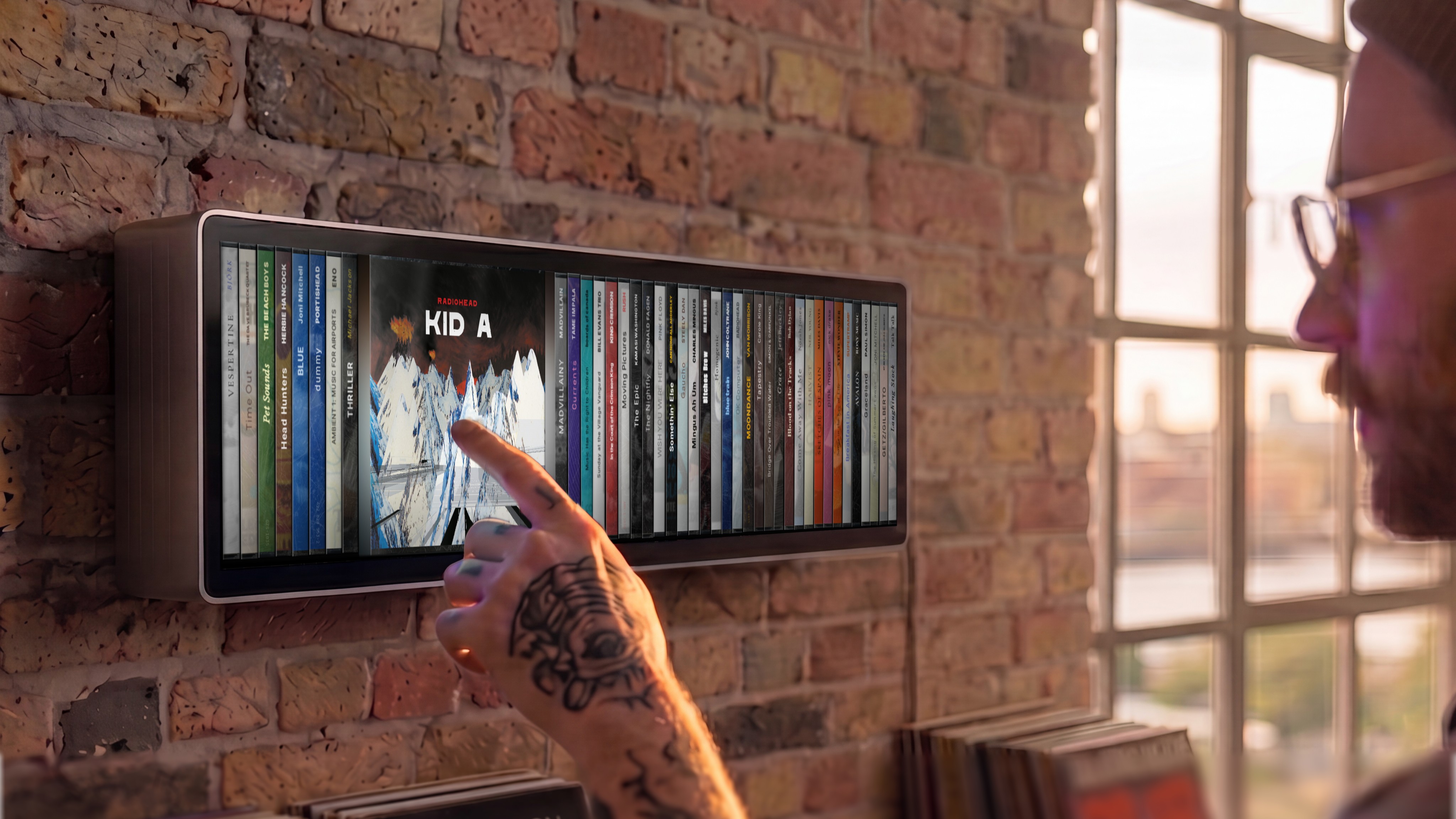
Just looking at the images of Spine brings back so many memories of seeing my home CD collection lined up in the cabinet — not to mention it looks great in a home audio setup. There’s just one question going through my head, however: will the convenience of Spine prompt users to stop collecting physical music? Amorim doesn’t think so.
“I don’t think it tries to compete with physical media in that sense. What I notice is every time someone connects their library to Spine, there’s an emotional wave that hits you when you see your music back on the wall again. You can’t explain it; you just feel it,” he elaborates, recalling one of his favorite parts about CD collecting.
He goes on. “My nostalgia comes from browsing the liners of the albums. I remember to this day there’s a Pearl Jam album that came with a bunch of little Polaroids, I think it was No Code, and I still love that. I miss it. Spine is not going to go there, and I would love for people to still go and buy those albums and experience that themselves”. At the same time, he reemphasizes Spine’s singular goal.
“It’s really about reconnecting people with music. I truly believe that the feeling of connection we have with music goes beyond just the pure sound coming off of it. It’s the relationships it can start, it’s the conversations it sparks.”
Casual discovery and conversations around music have dipped in the streaming era. For most people, listening to an album is enough, but for those who really appreciate music, discourse is vital. This is something Amorim wants to revive.
“I’ve recently written about bringing back serendipity and casual discovery. You know, it’s having friends over, and they start browsing through your collection and saying ‘oh, I remember this album’, or ‘oh I never heard of this one’,” he shares.
But as it stands, Amorim’s focus is introducing Spine to the world and developing a new kind of music player, but he believes there’s already room for growth.
“Right now the core focus is music doing one job really well, but I can see potential in browsing books in a similar manner, and potentially even films and TV to an extent,” he believes. “It’s that sense of curation that comes with a limited amount of space, even though of course you can swipe and keep going.
“But if you’re going to put something up on your wall in your home, you’re probably going to have a different level of curation than you would if it’s something hidden in your phone that nobody can see. So, I feel like that can apply to other types of media at some point,” he says.
There’s still a bit of time before users can get their hands on the Spine display. While pre-orders open on Kickstarter this fall, shipping doesn’t start until early 2027, so there’s still a bit of a wait. So far, Spine looks like a promising device, and I’m fascinated to see how music lovers take to it.