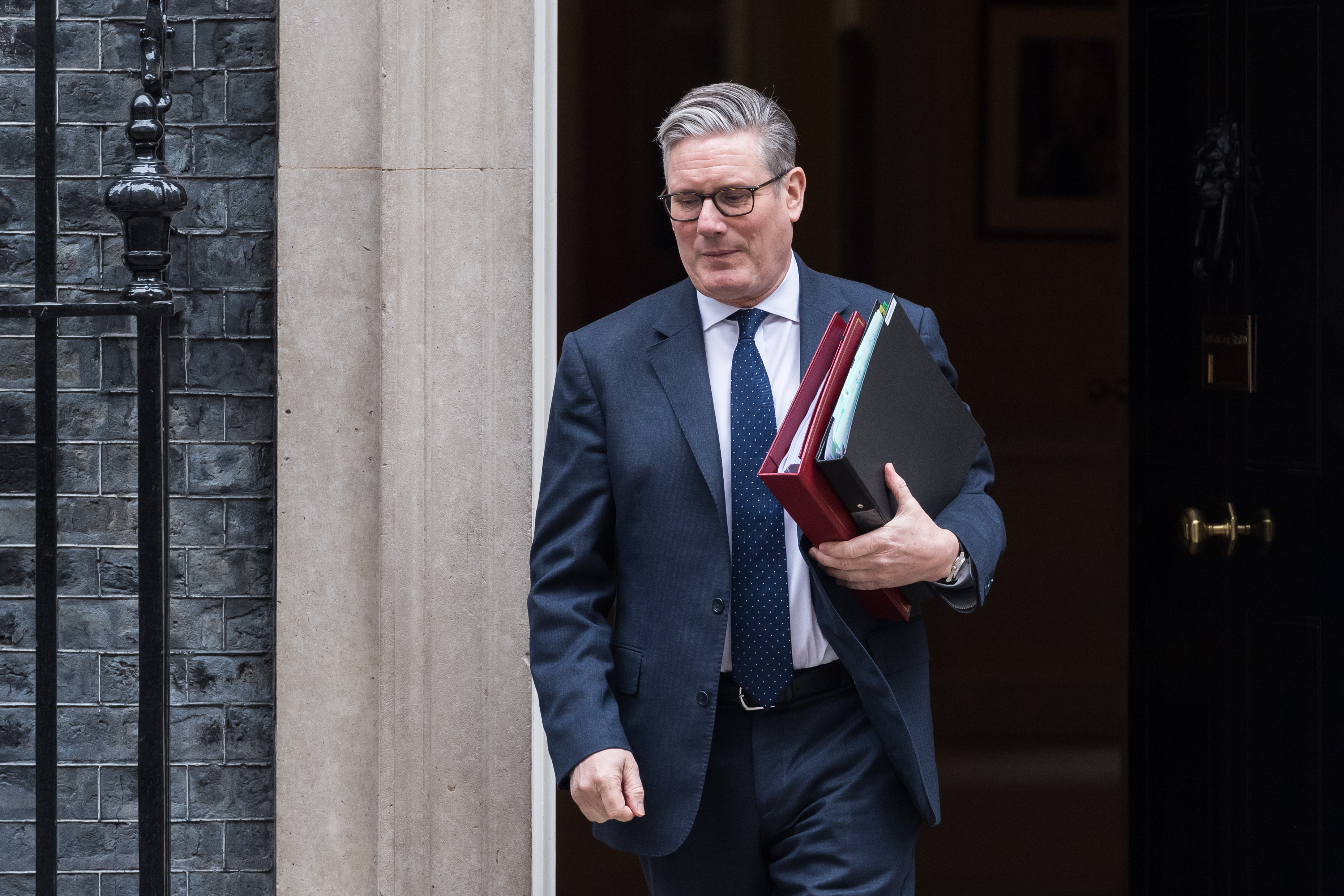
Keir Starmer, who resigned as Britain’s Prime Minister in June, announced Tuesday he will also be stepping down from Parliament to focus on international affairs.
Speaking to Camden New Journal, Starmer—who led the Labour Party to a landslide victory in 2024—said it had “been a huge honor and privilege” to serve as the Member of Parliament (MP) for Holborn and St. Pancras in North London for the past 11 years.
Prime Minister Andy Burnham paid tribute to Starmer during his first address to parliament since taking over leadership of the nation, crediting Starmer for securing one of Labour’s “best victories” and creating a “platform to change this country for the better.”
A by-election will now take place to replace Starmer as MP, with details to be finalized on the contenders and exact date.
Shortly after the news broke, Starmer shared a statement via social media, further explaining the reasons behind his departure.
You can read his words in full, below:
“Over the summer, I have had time to reflect and consider my future. I have decided that now is the right time to step down as MP for Holborn and St Pancras and hand the baton over to a successor.
It’s been an honor and privilege to represent the best constituency in the country since taking over from the great Frank Dobson 11 years ago. But it is now time to step aside and focus on other issues: international affairs including defense, security, trade and technology in a fast changing world. I will also continue working with others as I have done over many decades to tackle violence against women and girls.
As I do that, I will always remain immensely proud to have represented the place Vic, the kids and I call home.
I look back with pride on what my constituency team and I have delivered in Holborn and St Pancras since 2015 and I thank all those who I was privileged to work with on so many issues of local concern: affordable housing projects, delivering first class education and tackling youth violence through our Camden Youth Safety Taskforce.
I want to thank my CLP team who have always stood firmly by me, and given me the support I needed as I stood for Leader of the Labour Party and then as I took my Party from political, moral and financial ruin to an historic landslide election win in 2024 and two years as Prime Minister when we stabilised the economy, rebuilt our public services, invested record amounts in our defense and security, began lifting hundreds of thousands of children out of poverty and transformed Britain’s reputation with international partners.
I want to thank my constituency staff who, throughout all those 11 years, have worked tirelessly on casework and helped me do my utmost to serve the people of Holborn and St Pancras. I could not have done this job without them.
There will now be a process to appoint my successor ahead of a by-election. Whoever is lucky enough to become the Labour candidate here will have my full support and backing and I will continue to give my full support to the Prime Minister and this Labour government.”
Read More: Andy Burnham Calls for ‘New Politics’ in U.K. in First Speech as Labour Leader
Starmer’s final months at Downing Street
Starmer announced his resignation as Prime Minister and head of the Labour Party in June following months of scrutiny over his leadership.
The one-time lawyer initially fought against calls from within his own party to step down over his handling of the appointment of Peter Mandelson, the former British ambassador to the U.S. who held a yearslong correspondence with the late convicted sex offender Jeffrey Epstein.
After it was revealed in April that Mandelson had failed the security vetting in January 2025, only for his appointment as ambassador to go ahead the following month anyway on account of the Foreign Office overruling the decision, Starmer faced tough questions in parliament. Starmer denied having prior knowledge of the failed vetting process, telling parliament that “a deliberate decision was taken to withhold that material” from him.
Starmer weathered the storm, but faced renewed calls to step down in May, after Labour’s poor performance in local polls.
Amid a flurry of ministerial resignations from his Cabinet, speculation grew as to who could might potentially challenge and replace Starmer. When Burnham—who had been open about his desire to launch a leadership challenge—cleared his own path back to Westminster through winning the Makerfield by-election, Starmer announced his departure.
Read More: How the Iran War Splintered U.K.-U.S Relations as Trump Turned on Starmer
Starmer endured a splintered relationship with Trump towards the end
Soon after Trump returned to the White House in early 2025, Starmer paid a visit to Washington, D.C., and presented the U.S. President with an invitation from King Charles for a second historic state visit to the U.K.
Downing Street later secured one of the first international agreements with Washington following Trump’s “Liberation Day” tariffs, marking the early success of the relationship between the two world leaders.
Trump and Starmer’s partnership was further strengthened when the President traveled to the U.K. in September, as the pair went on to sign a “groundbreaking” billion-dollar U.K.-U.S. Tech Prosperity Deal.
But cracks started to appear earlier this year, as Starmer was among the European leaders to staunchly oppose Trump’s threats to annex Greenland. Another disagreement occurred when Trump downplayed NATO’s contributions in the war in Afghanistan, prompting a public rebuke from Starmer.
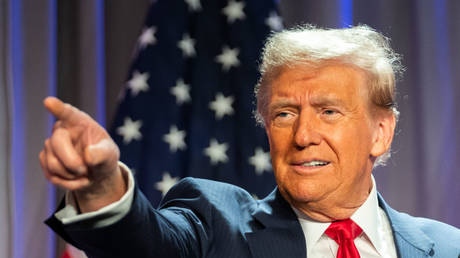
Relations further splintered when Trump repeatedly lambasted Starmer for refusing to actively involve the U.K. in the Iran war.
“He ruins relationships. We are very surprised. This is not Winston Churchill that we’re dealing with,” Trump said of Starmer in March.
Weeks later, the British Prime Minister admitted he was “fed up” with the President’s war in Iran and the detrimental financial impact it was having on the U.K.