ChatGPT has a new way to help you study with interactive flashcards that the AI chatbot can generate on demand from almost any subject or from documents you upload.
The decks save automatically in your ChatGPT Library, so they become something you return to whenever you need a refresher. In my case, it was all about dinosaurs and the history of paleontology.
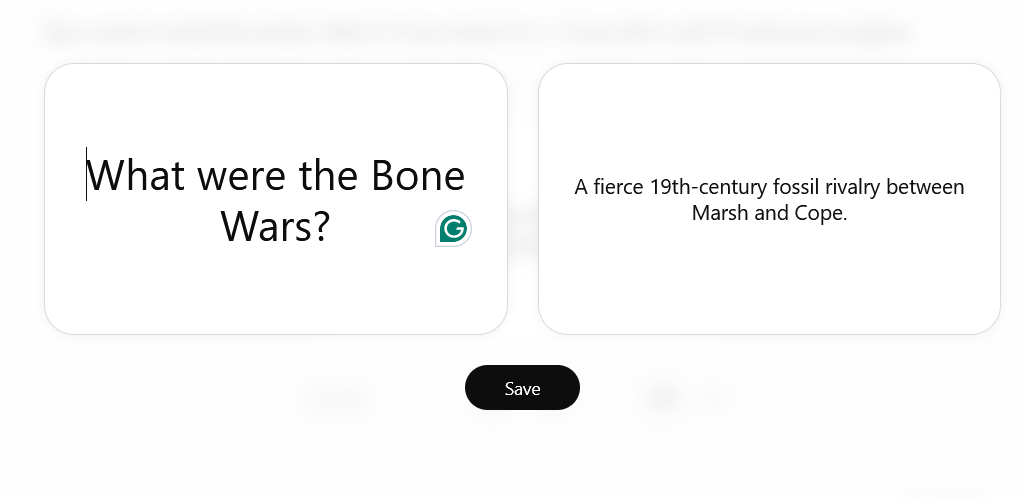
The flashcards are baked into the conversation; you just have to ask for some on a topic or based on attached information, and ten will appear almost immediately, with one question visible at a time. A prompt like “Make me some flashcards about dinosaurs”, will do the trick.
You need to self-mark the quiz. There’s a tick or a cross to click on depending on whether you know the answer, and you can click on the card to reveal the answer.
You can also edit the question or response as you choose, or shuffle the deck, which becomes increasingly useful once you have accidentally memorized the order of the answers. If you ask for more, the number of cards jumps to 30, then 50, and so on.
Dinosaur expertise
My paleontology deck started with the sort of material I actually wanted to learn, including early fossil discoveries and the development of dinosaur science. Instead of having ChatGPT explain the entire history of paleontology in one enormous response, I was forced to stop and retrieve individual facts.
That tiny bit of friction made the information feel much more like something I was learning rather than something I had merely read. OpenAI lets you ask ChatGPT to add cards or edit existing ones conversationally, so I could expand the paleontology deck without starting again.
Next I went broader and asked for flashcards about what dinosaurs actually looked like. That produced cards dealing with feathers, posture, skin coverings, and the evidence paleontologists use to reconstruct animals nobody has been able to photograph.
The actual studying is deliberately uncomplicated. I tried to answer each question, clicked the card to reveal the answer, and then marked whether I had got it right. Cards I miss can be practiced again later, while ChatGPT keeps track of that progress for future reviews.
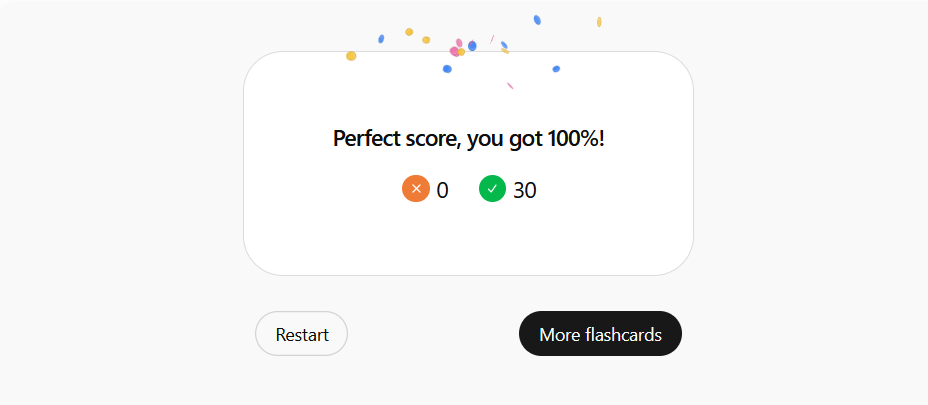
When I finally made it through a complete round correctly, ChatGPT rewarded me with a brief burst of on-screen fireworks. It lasts only a moment and does absolutely nothing for my understanding of paleontology, yet I would be lying if I said I didn’t enjoy it. Apparently, several decades of technological progress have led us back to the educational power of receiving a shiny sticker.
I also tested out the flashcards using some uploaded documents from online histories of paleontology and asked ChatGPT to turn them directly into flashcards. That’s a feature that makes flashcards potentially much more useful for students studying a specific class rather than a general subject.
I didn’t have to have the AI decide what generally mattered about a subject when it had the study material I wanted in front of it. ChatGPT pulled out important names, concepts, and details and converted them into short question-and-answer pairings. It’s faster than doing it manually, though arguably making them manually is part of the study process.
And while sticking to uploaded sources should make it more reliable, I still wouldn’t blindly trust the finished deck without double-checking. In particular, if you’re using flashcards for technical material where a small change in wording can completely alter an answer.
Quicker study than quizzes
There are plenty of other alternatives like Quizlet, Knowt, and Gizmo using AI to turn notes and documents into flashcards. Current flashcard tools increasingly compete on what happens after the AI generates the cards, including scheduling, practice modes, importing material, and long-term review.
ChatGPT’s advantage is convenience. I don’t have to decide to visit a dedicated flashcard service, create a new account, and learn another interface. I can be discussing paleontology with ChatGPT, decide that I actually want to remember some of it, and ask for flashcards without leaving the conversation.
The flashcards make an interesting companion to ChatGPT’s interactive quizzes, which I previously tested on many subjects. The quiz feature is more aggressive about exposing what you don’t know because it puts a question in front of you, makes you commit to an answer, and then tells you where you went wrong. You can also adjust the difficulty as you go, ask ChatGPT to make the multiple-choice answers less obvious, and have it concentrate later questions on areas where you struggled.
I see the flashcards as better for learning and reinforcing information, while quizzes are more useful when I want to find out how much of it has actually stuck. Flashcards feel less like a test and more like practice. The two features could work well together, though.
The simplicity of ChatGPT’s flashcards may be its best feature. It’s important to treat the first generated deck as a draft, but it gets made so quickly that it’s not a heavy time investment if you need to alter it. It’s also useful to tell ChatGPT the difficulty you want for the cards and any particular areas to focus on. For me, it’s time to really dive into the Bone Wars and the crazy world of early paleontology.